

21 new Red Stars in Buenos Aires and Lima from Sorrel Moseley-Williams


British journalist Sorrel Moseley-Williams has lived in Argentina since 2006, reporting on her South American home for Star Wine List since 2019. She’s just added a whopping 21 new Red Stars in Lima and Buenos Aires, with fresh reviews for many more existing venues. She gives us the low-down on the wine scenes in both cities, along with some top tips for visitors over these summer months in the southern hemisphere.
Based in the now trendy Chacarita neighbourhood (where you’ll find “a whole host of wine bars”), South America Ambassador Sorrel Moseley-Williams travels extensively (56 trips last year!) and is looking forward to wrapping up some writing and consulting projects while the country goes into “standby” mode for the summer. She’s also waiting to see what this season’s picking season brings for her winemaking project, SOREL Wines, in collaboration with Mauricio Vegetti of Lui Wines – especially for their increasingly popular skin-contact Riesling.
This past weekend, she’s been celebrating Carnival in a “very hot and sweaty” Buenos Aires. “It can hit 90% humidity here,” she says, “and 45 degrees can be normal, although pretty extreme. This summer, fortunately, has actually been quite relaxed and not too terrible.”
And what does that mean in terms of wines over the hotter period?
“I think that people will definitely go for whites. Whites is a section that's been growing. Certainly, Argentine consumers are more likely to give whites a whirl – step away from classic big reds – and, obviously, the younger generation is much more excited to see it. We also have winemakers who make rosés specifically, rather than just using the odds and ends left over to create an extra label. So we have a lot more serious rosés. Skin contact wines have been definitely growing in popularity over the last few years, and people are still excited by skin contact, orange and natural wines, and things that are chilled, and cooler, to combat the hot months as well.
“And it's the same in Lima. Lima has a very warm summer. People go to the beach. The only difference with Buenos Aires is they don't tend to have air conditioning much in houses or apartments, or perhaps in regular restaurants. So perhaps the experience is a little bit sweatier.”
Journalist turned sommelier
Sorrel grew up in West Sussex, in the UK, and later studied at University College London, which gave her the chance to travel to Argentina. After moving there permanently in 2006, she began writing restaurant reviews for the Buenos Aires Herald, soon fostering a love of wine which caused her to undertake further studies. Being surrounded by “a lot of very brilliant people” such as sommeliers Martin Bruno, Andrés Rosberg and Pablo Rivero, she became a sommelier and educator as well as writing about wine, food, travel and restaurants for titles such as Decanter and Wine Enthusiast, plus various books.
Today, Sorrel is Executive Sommelier for Niño Gordo’s restaurant group and Academy Chair for ‘50 Best Bars’ in South America, explaining her prolific travel across the region.
Looking ahead to 2026, she expects to see a rise in lighter styles of wine as consumers become “more knowledgeable” and curious, veering away from “big, buttery, or oaky” wines and known labels in favour of low-intervention examples and wines with stories behind them, often from smaller projects.
And for visitors to either city? Sorrel highlights Lima’s new walkway, the “Bridge of Peace”, as a good way of walking off a large lunch at one of its fantastic restaurants – with a sea view to boot (“also, the traffic in Lima can be very heavy, so it’s better to walk”). As for Buenos Aires, she says it’s “a fun city to kind of get lost in and wander around” due to its distinct neighbourhoods, but that everybody should try a steakhouse and then explore the various eateries, from small bars to Michelin-starred fine dining restaurants, if you get the chance.
Sorrel’s new Red Stars in Buenos Aires
Acuario Bar
Burdo
Casa Palanti
Diviiino
Mambo
Mengano
Ness
Overo Bar de Copas
Piedra Pasillo
Presencia
ProVinCia
Somos Cava
Treintasillas
Trescha
Vereda Adentro
Sorrel’s new Red Stars in Lima
What, to you, makes a good wine list?
“In Argentina, we’re now in this new period of seeing world labels come in, so we’re starting to see a change. Up until now, certainly in Buenos Aires, what would make a good wine list for me is balance – like, geographical balance of Argentina. There's a lot of new regions – Buenos Aires Province, south Chubut in Patagonia, and so having labels from very extreme parts, that are considered to be new winemaking regions, certainly contributes into having something balanced, where perhaps up until now we’ve been lacking global names – we certainly focus on what we have here in Argentina.”
It sounds as though both Buenos Aires’ and Lima’s hospitality scenes are booming – how would you describe them?
“The hospitality scene in Buenos Aires has always been dynamic due to the nature of Argentina‘s rollercoaster economy, where openings (and closures) happen with greater speed than in other capitals.
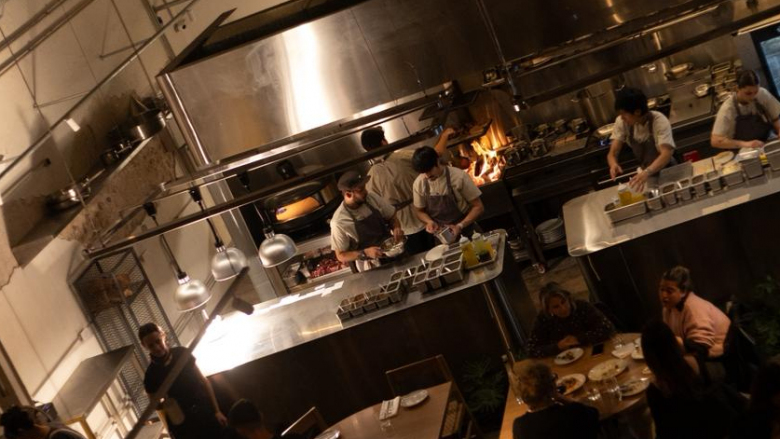
“A couple of years ago, smaller spaces for restaurants and coffee shops were a trend and, right now, we’re seeing a flurry of neo-bodegones openings – that’s to say, traditional eateries taken to the next level by chefs elevating Argentine comfort food, such as milanesas and pasta. By taking care with products and creating thoughtful wine lists, the experience is more elevated than one would expect of this type of restaurant.
“In Lima, hospitality remains high-end with lots of big names that feature on the world stage in terms of fine dining. The Peruvian capital is home to two restaurants that have topped the ‘World’s 50 Best’ list in recent years, Central and Maido, and booking a table at one or other is a must.
“Standards are high in terms of service and dining concepts are also very strong with an abundance of identity: diners are always likely to have an exhilarating experience. And while Peruvians love to eat and talk about eating, there aren’t as many casual eateries that take care of the fine details as in Buenos Aires. I'd like to see more great examples such as Rafael or 7 opening.”
Have you noticed any wine list or service trends unique, or particular, to either city?
“I’ve started to see in Buenos Aires what I see in São Paulo: by-the-glass pours served in a small elegant carafe. And, as wine imports are slowly becoming the norm rather than the exception, we’re starting to see global lists take shape. In both countries there has long been a drive to showcase vintages and names in particular.
“Somms have long been inspired to show ‘new’ winemaking regions such as the province of Buenos Aires and Chubut in Patagonia, or the higher elevations of Jujuy. By-the-glass lists are definitely a whole lot more exciting than they were 10 years ago in Buenos Aires, and there are lots of creative somms who invent regular pop-ups with chef friends, to inspire the next generation to drink.”
Which wines have you found pair best with the cuisines in Argentina and Peru?
“It’s no secret that juicy reds such as Malbec are a great match with a rib-eye grilled medium rare, but visitors should give Bonarda, Cab Francs or light Criolla reds a whirl. Peru’s classic ceviche raw fish dish and its cool leche de tigre (chilli pepper, lime and fish juice sauce) makes a great match with Torrontés and other aromatic whites, as well as skin contact wines.”
Do you have any pet hates on wine lists or in service?
“One of my pets hates is a sommelier not reading the room or understanding the table as to who is drinking wine. But it’s universal rather than specific to Buenos Aires or Lima. I’m not a fan of the show-off mentality (conversations about limestone soils aren’t for everyone) and I believe the key to fantastic service is understanding who is with you.”
Is there any one section of a wine list that you make a beeline for?
“I think, because there’s been a lot of development and care in the glass options, I do like to browse it to see what’s available. Because sometimes it’s nice to start with some things that you don’t necessarily want to continue with. A long time ago, after I qualified as a sommelier in Argentina, I had a pop-up by-the-glass event in a moment where it was very hard to have a decent by-the-glass option in a good restaurant. And so I had a pop-up where we’d go to a small new restaurant and they would offer up some tapas or like small plates of their dishes that they did, and we would provide maybe six or eight by-the-glass options so that wineries with just a case of wine could show off a new label or a new grape or new vintage. And obviously, consumers were excited to try new products. So it’s certainly something that is in development and evolving, and has greatly improved, and it’s something that I like to always like to have a little look at.”
What role do the wines of Argentina, and South America more broadly, play on the region’s wine lists?
“The role of Argentine wines is vital as the world’s fifth-largest producer. As it tends to be the handful of big wineries that are able to export, they are often repeated around the whole continent (I’ll probably circle Latin America four or five times in a year) so when I do see a small project listed, I’ll always try to highlight it to companions or the sommelier, and mention how great it is to see it listed.
“Without wishing to generalise, you probably see a spread of Chile and Argentine vintages on lists, and then a smattering of Uruguayan maritime-influenced labels, and possibly Brazilian sparkling wine and Peruvian wine that uses pisco grapes.”
Do you have a favourite style of wine?
“In general, I don’t have a favourite anything. I very much believe that any kind of wining, dining, drinking experience is emotional. It very much depends on who I’m with and where we are, what the weather’s doing – there’s a lot of things that go into this to make an experience a wonderful experience. Although I am a big fan of my own orange wine because I think it’s very special and unique, because it’s Riesling and there’s very few skin contact Rieslings not just in Argentina, it’s basically the only one that we know of in the world. It’s just extremely flexible and versatile. And although you might not believe that we have spicy food in Argentina, we do, and Riesling just really works incredibly well. It’s very honest in that sense. And so if I do have a favourite, it’s my own wine right now!”
Explore the wine guides to Buenos Aires and Lima.
Search like a Pro – explore 3,500+ wine lists