

New ambassador Aase E. Jacobsen on Oslo’s “adventurous journey”


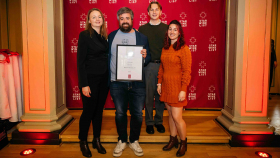
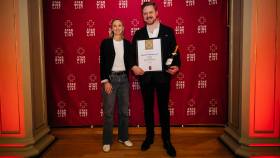
Star Wine List is pleased to announce journalist Aase E. Jacobsen as our new Oslo Ambassador. Co-Founder and Editor-in-Chief of Norway’s Apéritif magazine, Aase doesn’t bring just 40 years’ experience in publishing with her, but a deep knowledge of Oslo’s food and wine scene. Meet our newest team member as she adds her first Red Stars in the Norwegian capital.
When Aase E. Jacobsen was creating Apéritif magazine, back in 1994, the idea was “to help people find wines to go with their food and vice versa,” she tells us. Today, the title covers the “whole world of food and drink” with a team of trusted contributors, and through its 100-odd events each year.
Aase hails from both the mountains of Southern Norway and the coast of Northern Norway, and worked in Bergen early in her career. But it is Oslo that she has called home since her early twenties, moving to the capital city in the 1980s, and to her current neighbourhood (a 10-minute walk from contemporary restaurant hub Bjørvika) in 1990.
“I really love Oslo,” she says. “My offices have always been in the centre, so my favourite places to hang out are downtown and eastwards – where the most dynamic development has been found in [the restaurant] field.”
In October 2025, Aase joined jury members Stephen Wong MW, Mikk Parre and June Rodil MS to judge entries to Star Wine List of the Year Norway, and now joins the team as Oslo Ambassador. A prolific journalist, Aase tastes thousands of wines each year and has made it her mission to find good value for her readers. She has also collaborated with the Norwegian Sommelier Association for many years, previously acting as secretary, and ensuring that members receive the magazine. An integral part in establishing Slow Food in the Nordic Countries, Aase has written articles and columns for a variety of publications and taken part in panel discussions across the world.
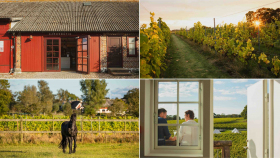
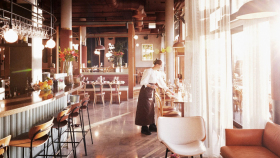
Today, she adds nine Red Stars to our Oslo guide, plus one in the northern Vesterålen archipelago, in Kvitnes. She also provides up-to-date reviews for three of our existing listings in the capital. And this is just the beginning!
For visitors to the city, Aase recommends the saunas in winter (“they are located in several places in the city, most of them by the Oslofjord harbour where you can swim to cool down”), then boat trips and bathing in the summer (“there are several bathing facilities in the city, all for free, and you may also take the boats to the small islands in the Oslofjord – a true charm – at a very low cost”).
This comes as Oslo-based Ambassador Manager Liora Levi also adds Red Stars to our guide, offering five new recommendations in Oslo and a new tip in Odda on Norway’s west coast. She’s also given us fresh reviews for two existing Red Stars. Plenty for wine lovers to investigate!
Aase will share her ambassadorial role with existing Oslo Ambassador, Gunnar Skoglund.
Explore the updated guide to Oslo’s best wine spots.
Aase’s new Red Stars
B VIN, Oslo
Brasserie Blanche, Oslo
Cru Vin & Kjøkken, Oslo
Grotten Vinbar, Oslo
Kvitnes Gård, Kvitnes
Mon Oncle, Oslo
Palace Grill, Oslo
Restaurant Betong, Oslo
Sparta, Oslo
Substans, Oslo
Aase’s Red Star updates
Beijing Palace, Oslo
Happolati, Oslo
Vintage Kitchen, Oslo
Liora’s new Red Stars
Brasserie Rivoli, Oslo
Buer Restaurant, Odda
Bukken Vinbar, Oslo
Campo Osteria, Oslo
St. Lars, Oslo
Stallen, Oslo
Liora’s Red Star updates
Grotto Bistro & Cave, Oslo
Panu, Oslo
How would you describe Oslo’s food and wine scene today?
“Oslo is an increasingly international gastronomic destination, with 11 Michelin-starred restaurants and cocktail bars among the world’s best, attracting foodies and visitors from all over the world. Even though the wine prices are high in Norway due to the taxes, I find that rare and top wines are reasonably priced both at the monopoly and at restaurants compared to other markets.”
Has that evolved over time?
“Absolutely. Norway’s wine consumption in the nineties was the lowest in Scandinavia – around six litres per capita, if I remember correctly. In 2023, it was 16 litres versus Sweden’s 22 litres. The first Norwegian sommeliers appeared in the beginning of the nineties and wine interest spread among the public, so it’s been an adventurous journey.”
What are you looking for in a wine list?
“For me personally (who tastes at least 8,000 wines a year), I want to be surprised and find wines I haven’t tasted for a while or even haven’t heard of. I’m a very curious person and very open to new experiences. I also want to trust the judgment, or recommendation, of the restaurant’s sommelier – to let them shine and show their knowledge. Through my work as a wine journalist, I’ve focused on finding real good value for the readers – this also influences the way I use a restaurant’s wine list.”
How can a restaurant or wine bar impress you?
“The ambiance, the people who work there, their level of attention and involvement in the guests is crucial – as is, of course, the quality and uniqueness of what’s served.”
What’s the best wine experience you’ve ever had?
“I will insist on an experience that involves food as this, so to speak, always makes it more memorable – I very seldom drink wine without food.”
What wine list trends have emerged recently?
“The most important change is the entrance of English wines, since they first entered the Norwegian market in 2017 and Norway soon became the number one export market for the Brits. England is now the fifth most important source for sparkling in Norway, and it’s important to remember that the prices are the same as for Champagne. Not just sparkling but also still wines, even reds nowadays. Norwegians love them.
“Oslo and Bergen used to be Norway’s natural wine hubs, but the interest of the public seems to be declining. Orange wines, on the contrary, seem to stay popular. Even though wine sales at the monopoly are down quite a bit since the top of 2022, some styles are increasing substantially, like South African wines, and Georgian and Lebanese reds.”
What’s unique about Norway’s wine scene?
“Norway has a wine monopoly, which means alcohol distribution and sales are rather strictly regulated. It also means we have among the world’s best and largest selection of wines. This is valid also for restaurants, which is why the wine lists in general have very high standards. As the alcohol taxes are related to the wines’ alcohol, not their ex-cellar price, and since the monopoly has a fixed margin, expensive wines in Norway are cheaper than abroad.”
Search like a Pro – explore 3,500+ wine lists