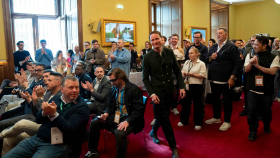


Berlin Ambassador Emmanuel Rosier: “now is the time to stand behind winemakers who need a spotlight”


As our Berlin Ambassador adds seven new Red Stars to the guide to his adopted home country, he tells us what’s hot on the capital city’s wine scene (a less dogmatic approach to natural wine, for one) and what’s not (overly theatrical wine lists). Included in his new recommendations are Star Wine List’s first Red Stars in Bamberg and Nuremberg. He explains why they made the cut.
Emmanuel (Manu) Rosier was born in Beaujolais. He grew up in the Côte d’Ivoire and then back in France, later gaining degrees and experience in Belgium, New Zealand, Finland, Denmark, Austria and, finally, Germany. He has lived in Berlin for the past decade (with a little spell in Paris in the middle) and reported on the German capital for Star Wine List since 2019.
These days, the Advanced Sommelier splits his time “between hands-on hospitality and project-based consulting,” he tells us. That means “running tastings with two local partners, delivering workshops, and working on collaborative winery projects. It’s a good mix of practical front-of-house work and bigger strategic pieces.”
He’s currently working on “a couple of exciting projects that aren’t strictly wine related,” but aided by his wine and hospitality background. “I’ll keep doing tastings and scouting, but I’m also broadening into other aspects of hospitality, marketing and management.”
Within his latest batch of Red Stars, Manu notes three in Berlin as particular favourites: L’Apéro (“an obvious favourite – I’m French and it genuinely made me feel at home. The apéro spirit – small plates, easy conversation, bottles that invite you back to the glass – is real there”); Der Kleine August (“one to watch: it’s small but lively, and winemakers are already coming to host tastings, which says a lot about its credibility”) and 8000 Vintages (“which I’d describe more familiarly as Berlin’s friendly ambassador for Georgian wine – generous, educational and thoughtfully curated; they open many Georgian bottles by the glass and make qvevri wines approachable”).
“Those three do very different things, but each does it with conviction. And the other venues I selected are equally worth a trip – from contemplative, wine-first places to warm, convivial bars, there’s something here for every kind of wine curiosity.”
Manu’s new Red Stars
075 Weingut & Handel, Nuremberg
8000 Vintages, Berlin
Der Kleine August, Berlin
Edelfrei, Bamberg
Estelle Dining, Berlin
L’Apéro Bar, Berlin
Monu, Berlin
How did you go about selecting these new Red Stars?
“I chose places where wine is the reason the room exists – not a decoration or a label. My process was simple and uncompromising: visit, taste, talk to the team, watch service and see how the list works with the food and the space. I look for a clear curatorial voice, bottles with provenance and character, and teams that can explain why a wine is listed rather than simply recite names. Longevity and honest hospitality matter as much as the bottles – a list must work for real guests, night after night.”
You’ve included one listing in Nuremberg and another in Bamberg – how did those win you over?
“I know Difan Xu (075 Weingut & Handel) personally and I’ve followed her since her restaurant days in Berlin. What won me over is how she brings sommelier discipline into a neighbourhood format: a precise, sommelier-led list that feels generous and civic rather than performative. That personal knowledge and respect for what she’s built made including Weinbar 075 an easy decision. The same goes for Marlis Bohnengel at Edelfrei in Bamberg – with her team, she’s created a place that introduces people to personalities, not just labels; pairing restaurant and vinothek lets bottle, plate and producer talk to each other, so every visit becomes an encounter.”
I want more bubbles and rosés on lists
What are the main trends you’re seeing across wine lists in Berlin right now?
“A few clear trends:
- Natural / low intervention is still strong, but it’s now less ideological and more about honest producers and terroir.
- Sharper by-the-glass programmes – venues are investing in open-pour systems so guests can explore without committing to a bottle.
- Specialists and single-country projects – depth beats scattershot lists; single-country shops and focused bars are gaining traction.
“A practical example of accessibility is Flor at Nomi Weinbar. She’s built a disruptive, user-friendly approach – short thematic flights and clear formats that demystify wine for newcomers without dumbing it down. Two other places that show current directions are Ernst Cave (a room that strips everything back so wine is the subject; tasting feels serious and contemplative) and new Red Star Monu (a hand-built, warm local bar with a natural-leaning list and cocktail intelligence that make wine approachable for a wide crowd). These examples show restraint and conviviality can both work – but only when they’re honest.”
What’s one trend that needs to end?
“Wine lists as theatre. Long, indiscriminate inventories that pretend to be encyclopaedias are tired. And slapping “natural” on a menu as a buzzword without any curation or quality control only cheapens the movement. Less spectacle, more care: a clear voice that guides guests, not confuses them.”
What would you like to see more of?
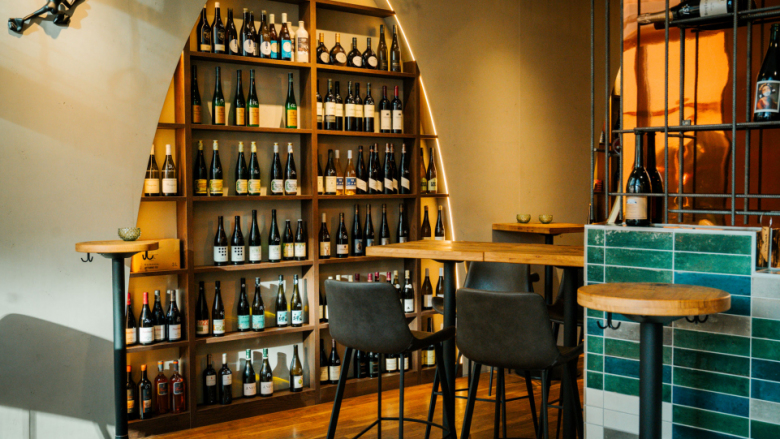
“More depth on German regions beyond the usual names; more space for under-represented producers – small estates, women winemakers and unconventional regions. Our wine industry is under pressure and now is the time to stand behind winemakers who need a spotlight. I’d also like more thoughtful by-the-glass programmes and clearer tasting formats in bars – short, structured flights that teach something in 30 minutes. And, honestly, I want more bubbles and rosés on lists: both styles are hugely versatile and deserve creative attention.”
What makes a good wine list?
“A good list has a point of view. It’s curated, not comprehensive; it balances surprise with familiarity; it respects provenance and places producers in context; it supports the kitchen and offers entry points for all guests. Practicalities matter too: clear categories, an intelligible glass programme, and staff notes that help rather than mystify. Above all, the best lists make you want to drink the wines they present.”
If venues believe they deserve inclusion, they should reach out to the Star Wine List team
How can a sommelier impress you?
“Be generous with knowledge and stingy with performance. Impress me with quick palate reading, precise recommendations, careful bottle service and real stories about growers that aren’t PR copy. Confidence without theatre, curiosity without preachiness – and the knack of turning technical detail into something a guest can taste and enjoy immediately. A lot of sommeliers in Berlin and Germany already do this – the list of impressive people is long.”
Where are you travelling to next?
“I just returned from Fuerteventura and Gran Canaria, where we tasted brilliant Listán Negro and Malvasía from small, lesser-known producers. We drove, stopped where we felt like it and kept being impressed by the number of exciting small estates we found. Over the next three months I’ll be in Slovenia twice: I’m working with SVL (Slovenska Velika Lega) on marketing actions. SVL is Slovenia’s collective wine body that promotes Slovenian producers and its Terroir and I’ll be helping with campaigns and tastings to bring Slovenian wine stories to new audiences.”
Do you have your eye on more potential Red Stars for Berlin?
“Absolutely. I’m constantly ‘scouting’ Kreuzberg, Neukölln, Prenzlauer Berg and Mitte for small, deliberate wine bars and specialist shops that have a clear curatorial voice and repeatable hospitality. A few already stand out – I’ll be submitting candidates for the next Berlin update. If venues believe they deserve inclusion, they should reach out to the Star Wine List team.”
Discover the best wine spots in Berlin, with our city guide.
Search like a Pro – explore 3,500+ wine lists