

Andreas Rosendal on his journey to becoming Sweden's first Master Sommelier
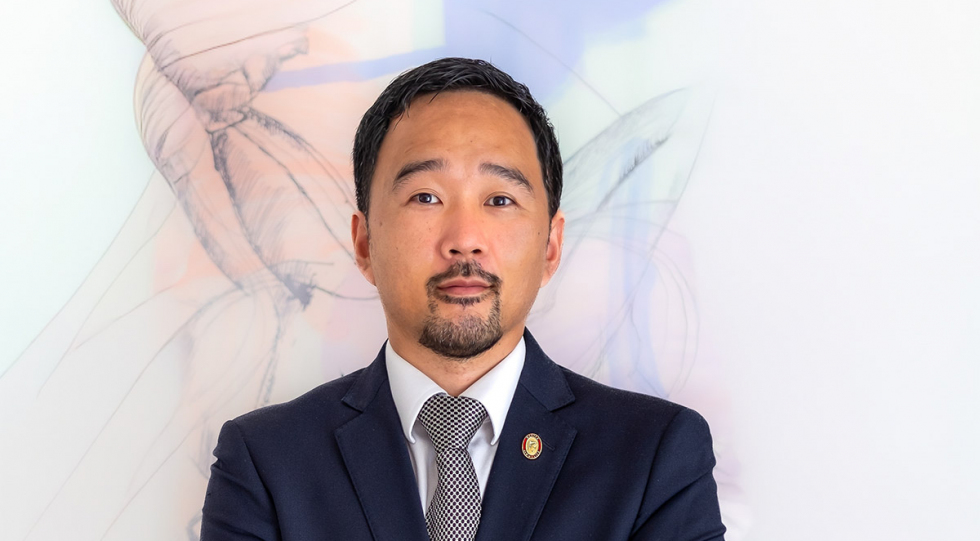

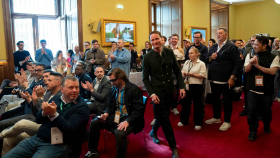
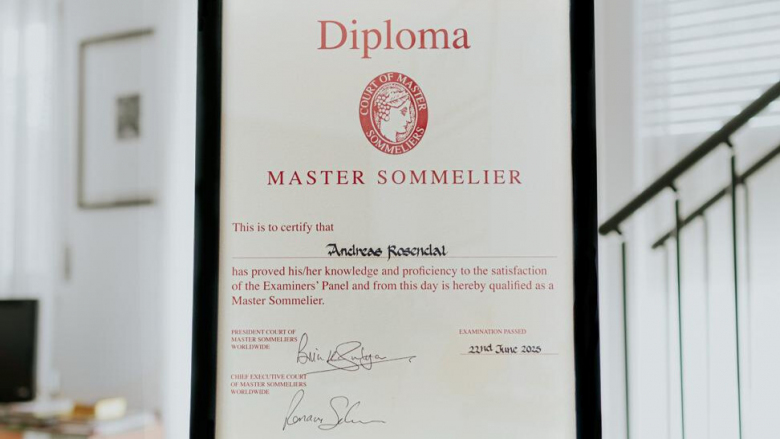
In June 2025, Andreas Rosendal passed one of the toughest wine education programmes there is, to become Sweden’s first – and one of the world’s 293 – Master Sommelier.
“I honestly didn’t think I would make it,” Andreas tells us. “I had already planned to spend a year in Verona with my wife, who is from there, and continue to study, but suddenly I was standing with the diploma in my hand. Then came the next question: what do we do now?”
Andreas may not be sure what’s coming next, but one thing’s for certain: wine has taken him on quite the journey already.
How it all began
That Andreas started working with wine happened by chance. He wasn’t academically inclined, so when he had to choose a high school programme, he wanted to do something practical, and the hotel and restaurant track was at the top of the list.
“I wanted to become a chef but the program wasn’t as romantic as it looked on TV cooking shows,” he recalls. “When I had to stand and clean fish for an entire day, I decided to switch to service instead, and I liked that.”
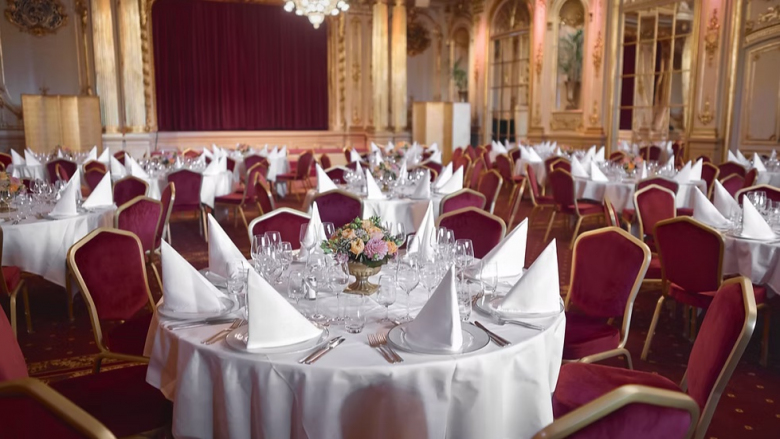
At 17 he did an internship at the historic Grand Hôtel, in Stockholm, taking the train from his small hometown of Tollarp, southern Sweden, to the capital. Once there, he was mightily impressed by the starched tablecloths, the staff in white gloves, and all the wine the guests enjoyed.
“I couldn’t understand how the guests could spend so much money on wine. So much money disappearing in one evening just on wine – I thought it was completely crazy,” he says with a laugh.
After the internship, he received his first wine book as a farewell gift.
“It was called Grapes & Wines: A Comprehensive Guide to Varieties and Flavours by Oz Clarke and Margaret Rand, and I read it cover to cover, over and over again. I read about the differences between Riesling and Gewürztraminer, and I kept studying, even though I wasn’t allowed to drink wine because I was only 17,” he says.
After high school, he started working in Grythyttan and entered the three-year Culinary Arts programme at Örebro University.
“I had no idea how studying worked,” says Andreas. “Writing essays has been a recurring dilemma throughout my journey. I dropped out in the second year and only got top marks in the beverage courses. The rest I failed.”
Instead, he began studying for his WSET exams and found jobs abroad. First in Norway and then in Australia, before moving to England in 2010.
“I had completed all of WSET except for the thesis,” he says. “That’s when I hit a mental wall – essays and I just didn’t work together, so I put it all aside.”
Andreas left Scandinavia, in part, because sommeliers there always have another job tacked onto the side – sommelier and maître d’or, sommelier and restaurant manager, and so on.
“In England, as a sommelier, you just do the wine. Period,” he says, adding that this is still the case today.
The motivation to keep studying
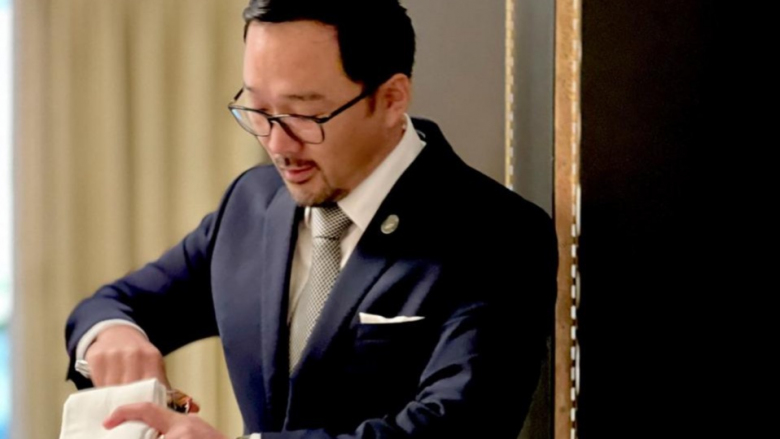
“When I started at the Court of Master Sommeliers, it was because of my ego. I wanted to be the best. I started in 2010, and three years later I passed the Advanced level as one of four out of 22. Then I was invited to the Master level, passed the theory and the practical exam on my first attempt, but failed the blind tasting,” he recalls.
He found an excuse for his failure.
When blind tasting the last of the six wines in the exam, he was certain it was a Rioja Gran Reserva. “But during the oral exam, I saw one of the judges shake his head, and I became uncertain,” he says. “So, I quickly changed my answer and went with Nebbiolo, which turned out to be completely wrong. It was a Rioja.”
At the time he was convinced that he would have passed if he would not have changed last minute. But looking back, he now says it was just an excuse to save face.
“I convinced myself that I knew this and that it wasn’t really my fault that I failed.”
He tried again the following year but had only practiced blind tasting with one other person – “because I thought the others weren’t good enough.” On his second attempt, he identified four wines correctly. On his third attempt, he was so stressed that he couldn’t smell anything and only got two wines right.
Now he had to re-do the entire Master programme from the start, including the theory.
“My attitude was: ‘This is not for me.’ The following year my son was born, so I thought, I’ll quit this and focus on family life instead. I switched from being a Wine Director to become a Food and Beverage manager at a two-star restaurant instead, and life went on.”
But then he got a job in northern England, and the large restaurant group asked him to create a training programme for the staff. It was a turning point.
“The mentoring aspect is the part of the profession I like best. That’s what has given me the most, looking back,” he says. Teaching others rekindled his desire to keep studying.
“I hadn’t opened a book in six years, but my mindset was completely different. It was no longer about becoming a Master Sommelier but about becoming a better sommelier.”
When Andreas studied the theory again, it wasn’t about rote memorisation, but about asking why, understanding, and being able to explain it to others.
“An important part was also that I didn’t see failure as something negative,” he says. “On the contrary, it was the journey of learning more that became the priority. I was no longer afraid of going in to take the exam.”
He explains that exams force everyone to take the time to study – something you otherwise wouldn’t do. And it takes a lot of time to become a Master Sommelier.
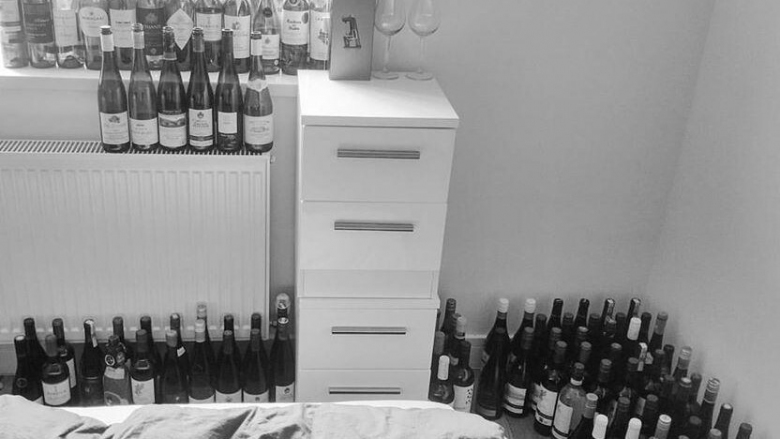
“I studied theory for 10 months, eight hours a day. Then I blind tasted wines every day for five and a half months. Every morning my wife prepared different flights in little bottles from Ikea – it became part of the morning stress. I kept statistics on everything and could clearly see my weaknesses and strengths.”
Why pursue the Master Sommelier over other titles?
“When I moved to London, I dreamed of becoming a Master of Wine. To be honest, I hadn't really heard of the Master Sommelier Diploma before. However, as I learned more about both programmes, it became clear the direction of the two were completely different. The Master of Wine programme focuses on the off-trade (retail, distribution, etc.), while the Master Sommelier is geared towards the on-trade (hospitality). Because I loved being a sommelier, it became an easy choice in the end – and when someone asks me why they should pursue this path, the answer is simple: it makes you a better sommelier, a much better sommelier!”
Andreas emphasises that the approaches to each qualification are different, and that both represent a marked step up from the preliminary exams.
“The training to become a Master of Wine or Master Sommelier is a marathon, unlike WSET, which does it step by step,” he says. “For Master of Wine and Master Sommelier, you have to know everything at once, not just bit by bit.”
What do you hope to inspire through your Inspiration Day masterclass?
“For me the Inspiration Day is a wonderful opportunity for me to, well, inspire other people to embark the Court of Master Sommelier path. It is great to see more and more people doing the CMS Certified course in Stockholm already and I hope we will see more people go for the Advanced and MS in the future. My Masterclass will really be about how you should approach those exams, and what I found really helpful along the way. The Court of Master Sommeliers isn’t very well known in Sweden, and I want to show that it’s not as difficult as people think. You just have to learn the methodology,” says Andreas.
And what now?
“I am thinking about starting the Master of Wine programme in the close future”.
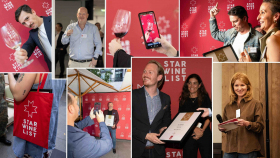
Andreas’ masterclass at Star Wine List’s Inspiration Day, on 10 November, will delve further into his journey to Master Sommelier, and offer practical tips on how to train for – and pass – the blind tasting. Attendees will blind taste two white and two red wines from classic regions, with Andreas guiding guests to help them reach the right conclusions.
Search like a Pro – explore 3,500+ wine lists