


The ProWein x Star Wine List panel: hope for the future of fine wine
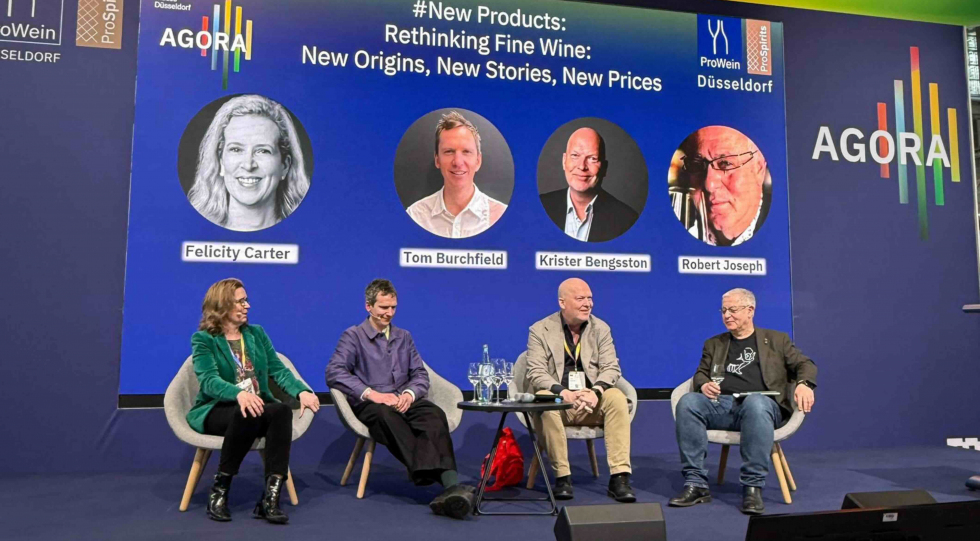

On Sunday 15 March, Star Wine List’s Krister Bengtsson participated in a panel discussion in the ‘Agora’ area of ProWein Düsseldorf. The topic was fine wine – what does the term mean today and what is the category’s future? Despite a changeable market and a rocky few years, one thing seemed certain: there is hope.
In a conversation chaired by Felicity Carter, Krister was joined by Tom Burchfield, Head of Market Intelligence at Liv-ex, and writer Robert Joseph.
The event began with a keynote presentation by Tom, providing insights into today’s fine wine market, which led into a debate on just what ‘fine wine’ means, who is influencing buying trends, and what fine wine lovers – of every sort, and in all locations – truly want right now (or at least, are willing to pay for).
Here are five crucial lessons learned:
1. Stability is returning to the market after a three-year slump
The data provided by Liv-ex for this discussion showed a steady increase in sales as of September 2025, of around 4% – a gentle yet heartening trend after the precipitous nose dive preceding it, which Tom described as “the longest and deepest downturn that the fine wine market has had since Liv-ex has been monitoring this for the past 26 years.”
Optimism is returning, too, with trade predictions cautiously hopeful across Europe and Asia based on buying trends. The US market, unsurprisingly, is still suffering from falling buying rates and massive uncertainty, but showing “some positive signs.”
2. By-the-glass selections are more important than ever
Krister added feedback from the Star Wine List network, having recently talked to sommeliers Paul Robineau MS (Wine Director of the Gardinier group, which includes Le Taillevent in Paris) and Pascaline Lepeltier (of Chambers, New York) on the topic, and gleaned insight from sommelier ambassadors spread across the rest of the world. Consensus is clear: by the glass lists are crucially important.
This is because, first of all, the cost-of-living crisis means that consumers have less disposable income to spend on wine and, if fine wine is the goal, then that means a glass of something really special will often trump a bottle. Wine drinkers are showing a marked curiosity, too, and eager to try new things – this is much more safely done by glass, not least due to cost, as it’s less of a gamble to order by the glass than waste money on a bottle you don’t like.
Of course, the movement towards low- and no-alcohol options and the focus on drinking less wine, but of better quality, also pushes people towards the glass section of a wine list, either for their own moderation and/or because fewer guests around the table may be drinking, again lessening the need for a full bottle.

3. Burgundy retains its crown but the market is fragmenting
Burgundy was hit hardest by the market’s recent drop, after having previously enjoyed an enviable wave of demand compared to other regions. Today, the top end of the Burgundy market is showing more stability and prices, across the board, are settling after the recent volatility. But who is drinking these top Burgundies, and who will be collecting them in years to come? They may retain caché in some circles – and on restaurants’ wine lists – but, along with Bordeaux (which used to dominate the secondary market), it is suffering as alternative regions and styles of wine take an ever-greater trade share.
Price plays a big part in this, and will continue to do so, though there is also a general curiosity amongst consumers leading the classics to take a hit as wines from lesser-known locations, grapes and producers pique interest.
In Tom’s words: “wines that are at attractive prices with interesting stories, they’ll play a critical role in the next phase of the market.”
4. Value is crucial, in all forms
In his discussions with international wine professionals, Krister has found that “the one thing that comes back across the board is value – the somms themselves are looking for good value, the guests are asking for good value, and the entire trend is about good value.” Hence the by-the-glass trend mentioned above but, also, changes in how consumers regard wine as an investment.
This creates somewhat of an existential dilemma for fine wine, as drinkers veer away from the typical buying and drinking models associated with the product category, according to Robert. He explained that while, in previous years, consumers would buy wine in the hope that its value would appreciate over time, thus allowing them to enjoy drinking some of it while looking forward to returns on their investments, drinking patterns have evolved. Today, people are drinking less (even in France) and so there is less need for robust personal collections; realistically, less money for them too.
While traditional fine wine investors are less likely to have been affected by economic restrictions, the mindset behind wine (both consumption and collecting) is shifting.

5. ‘Fine wine’ has a broader definition than before
Is beauty in the eye of the beholder, or does ‘fine wine’ refer purely to the classics (be they regions, producers, or both)? There are endless disagreements about which wine is ‘fine’ with one school of thought suggesting that the term can simply be defined as wine that’s being traded. But is this view outdated?
Felicity noted Areni Global’s research projects looking at new investors, which showed that some fine wine markets are incredibly hard to penetrate, even if buyers have the necessary funds – long waiting lists and limited allocations make some wines unavailable even to those who can afford them. Thus wines being traded should not, surely, define ‘fine wine’ overall.
Krister pointed to feedback from Star Wine List’s Parisian contacts, who’ve told him how interesting wines are coming back onto the market from allocations previously snapped up by restaurants and private collectors, thus expanding the remit of fine wine in hospitality settings. One example is Domaine Labet, a top Jura producer whose wines may not have been considered ‘fine’ in previous, or traditional circles, but which garner fierce devotees – especially among the younger generations. This adds to the fragmentation of the ‘fine wine’ market as well as throwing into question what the term even means.
On this point, it would seem that the jury is still out.
But fine wine? That’s not going anywhere.
With thanks to Liv-ex for the data and insights.
Please note that this data was gathered before recent events in the Middle East; it is uncertain how the world’s markets will respond.
Search like a Pro – explore 3,500+ wine lists