

index.wine gives European wine professionals a direct line to Spain’s small-batch producers
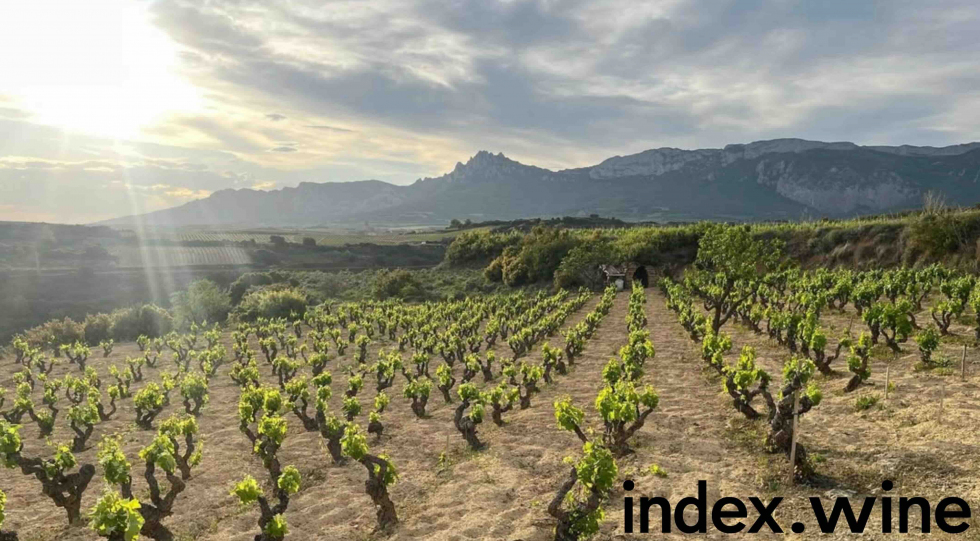

There’s a new way for trade professionals to source quality Spanish wines. Online distribution platform index.wine (pronounced “index dot wine”) went live in early 2025, transforming the way that Spanish wine is shipped around the EU and giving a voice to smaller, artisanal producers whose wines might not always be so readily available. Taking advantage of a recent change in EU legislation, index.wine provides a modern – and no-faff – means of procuring top quality Spanish wines for the on- and off-trade.
index.wine is an easy-to-use online store that features extensive ranges of an expanding portfolio of around 20 artisanal Spanish producers, shipping orders directly from the wineries to customers, with wines arriving duty paid and ready for re-sale. It is currently available in eight European countries: Belgium, Denmark, Finland, France, Italy, the Netherlands, Sweden and the UK.
First question: does the index.wine team see themselves as industry disruptors?
“That certainly has been an inspiration,” says co-founder Diego Beas, who created index.wine with colleague, Inés Caballero. “Simply because we weren’t able, as consumers, to find different things we were interested in. We don’t think [the company] competes with traditional wine distributors as the business is set up right now. There’s a new business opportunity, yes, but it’s a very niche space – we’re just trying to help small wineries reach a specific kind of client.”
How does it work?
Sommeliers, wine managers, wine buyers and restaurant owners are invited to subscribe to the index.wine mailing list – the main communication channel used by the platform to present offerings and provide all relevant information regarding new winery additions, new lots, new vintages and special gems.
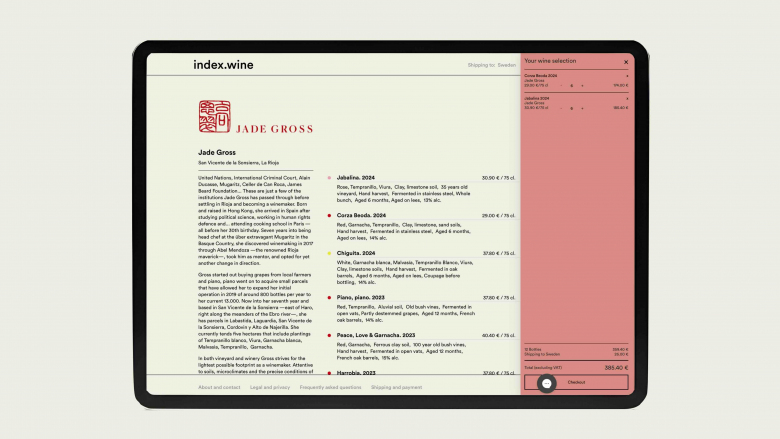
Once on the platform, it’s as simple as creating a customer profile and, from then on, everything works like a standard, contemporary e-commerce store. Except that it’s for professionals. Each winery has a dedicated profile page featuring information on its history, ethos and style, and listing all wines available – these often include cuvées not readily available elsewhere, thus allowing for a deep dive into each producer and the opportunity to acquire greater selections from each one.
Rather than filling in complicated order sheets or going through an agent, buyers can simply add wines to their cart (one winery at a time), with a minimum spend of €340 per order – there are no further MOQs (minimum order quantities). Following card payment at checkout, index.wine organises shipping direct from the winery, bypassing the need for intermediary warehouses. The wines are dispatched via courier within 10 working days, arriving in “pristine” condition from the winery, with all necessary import and export documentation – no customs authorisation, excise compliance or import licence is needed on the business’ side. Since they arrive with all duty paid, these wines can then be sold on immediately.
“The specific export/import model we’re using has only been possible since 2023,” Inés explains, “with the implementation of a recent EU directive from 2022 that allows for alcohol to travel amongst EU countries on a B2B scheme using a fiscal representative in each country (no longer needing a physical fiscal deposit were the wine had to travel first before being distributed inside the country).”
The only caveats are that purchases must be made from one producer at a time (since the wines are sent from each winery) and that some producers cannot ship to certain countries (information on this is available on the wineries’ profile pages).
The wines
All of the producers that index.wine works with employ low-intervention techniques, combined with low yields, the use of indigenous yeasts and so forth. Adherence to this philosophy is of great significance to the index.wine team, more so than size or age of the wineries themselves.
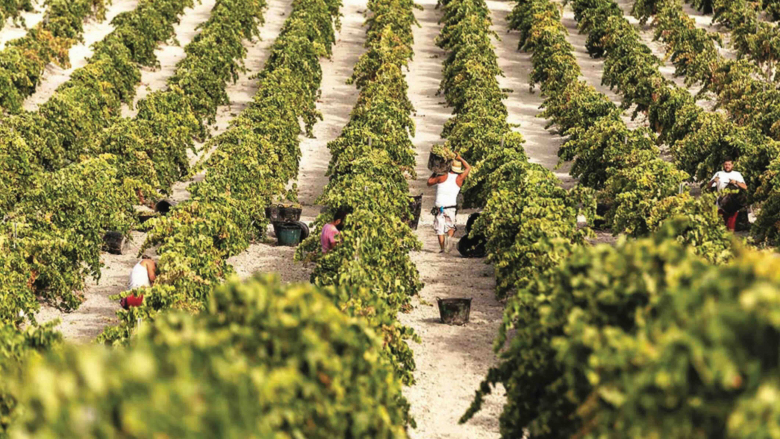
Featured producers include the six-hectare Aseginolaza & Leunda (a new name in Navarra and the work of two environmental biologists with a penchant for old vine Grenache), the historic Barbadillo in Sanlúcar de Barrameda (founded in 1821), oenologist Joan Rubió’s own project, Cal Tiques, the mountainous Frontonio (whose wines are aged in the seventeenth-century caves of Alpartir), and Jade Gross (the American-Chinese chef-turned-winemaker helping to reframe the wines of Rioja).
“Our portfolio evolves regularly,” says Inés, “showcasing new wineries and vintages, both from established and emerging producers. We only work with old-school, small batch, artisanal wine from Spain. We carefully select the wineries to create a unique index of the country’s most idiosyncratic and honest producers.”
These are wines that often have limited reach outside of Spain itself, hence why index.wine is proud to give them a voice – and presence – further across Europe. If customers are interested in particular wines or wineries not yet listed on the site, then index.wine will work to get hold of them.
As such, this new platform is designed to complement other procurement channels – not fight against them. The focus is resolutely on providing an easy means of acquiring interesting Spanish wines – something of a game-changer for sommeliers and other trade professionals.
Who’s behind index.wine?
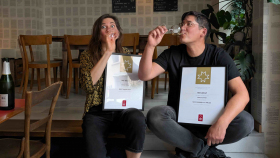
Architect Inés and media professional Diego are wine-loving colleagues who fed their passion for the subject by attending trade fairs and even making wine together. As engaged consumers themselves, and by travelling around, they noticed a problem.
“We realised that if you travel to a city, Spain’s current regional diversity and wine style richness was terribly represented,” says Diego. “We realised that there was a lot of good wine that wasn’t reaching the right places, or it was very difficult for them to reach there. It’s a problem related to wine on the one hand, and the way traditional distribution channels are currently set up on the other. So, knowing a lot of people in the wine business, that’s how we decided to start the platform. We thought it would be a good tool to be able to bring these lesser-known wines or wineries to these cities or countries in an easier, more agile way – because distribution at the end needs a very good, very big infrastructure.”
And so index.wine was born. Based in the Basque country, the pair works with a small team of collaborators across Spain (“for design, email, campaigns and also insider tips on new wineries and interesting wine projects”), with partners in each of the nine countries to which they distribute.
Sommeliers and wine buyers across the trade should sign up to the mailing list and can explore the portfolio online.
Search like a Pro – explore 3,500+ wine lists
Index.Wine

.