


Wine regions of the world, Michelin’s got your number


Having secured money from tourism boards for its restaurant guides, Michelin will soon invite wine regions to become Michelin customers. Or so thinks Krister Bengtsson. With limited information about how Michelin’s new wine section will be funded, or judged, the Founder and Publisher of Star Wine List gives his own predictions in this analysis. Will he be proved right or wrong?
When wine writers and experts gathered for the annual ÖTW Single Vineyard Summit at Grafenegg Castle last September, The Wine Advocate’s Austria expert Stephan Reinhardt was there as usual. But Austrian winemakers within the association were starting to wonder why so few of their wines were being rated and published by the publication.
The answer, I suggest, can be found in the newest part of the Michelin Guide empire, and the business model that will accompany it.
100+ years of book publishing
It is hard to believe now but, only 15 years ago, the Michelin Guide was in serious trouble. As with most legacy media companies, the advent of the web, and especially smartphones, had caused a painful disruption: the Michelin Guide had essentially been a book publishing business for more than 100 years, and yet the habit of buying guide books printed on paper was quickly becoming a thing of the past.
In 2011, according to a report in the Financial Times, the losses for the guide were running at €15 million per year. A number so steep that Michelin hired strategy consultants Accenture to consider options that even included shutting down the guide completely. According to the FT, Accenture “issued a dire warning: the company needed to change rapidly or risk becoming a forgotten relic in the digital age.”

Like other media companies, the Michelin Guide went looking, and shopping, for alternative strategies. There were some acquisitions that gave the impression of throwing spaghetti on the wall to see if it sticks, like buying Bookatable in 2016, then selling it to TheFork in 2019. It also bought Robert Parker’s Wine Advocate and Le Fooding in 2019 and 2020 respectively.
Other deals look more strategic in hindsight, like the purchase of Tablet Hotels.
Subscriptions became the way
Both Wine Advocate and Tablet Hotels brought paying subscribers and members to Michelin, offering the company a new revenue stream and loyalty base. The Wine Advocate also did events, and although Robert Parker was on his way out, the brand was still strong in wine circles.
But The Wine Advocate was losing its wine rating hegemony after Parker’s retirement in 2019 – plenty of other writers were stepping up and all the new social media ways of recommending wines were gaining force. It is not hard to imagine that the subscription base of The Wine Advocate is now growing older. (We can only guess at the details, since the Michelin Guide is part of the Michelin tyre conglomerate, which does not separately report any numbers for the Guide.)
But along the way, Michelin struck gold on its own.
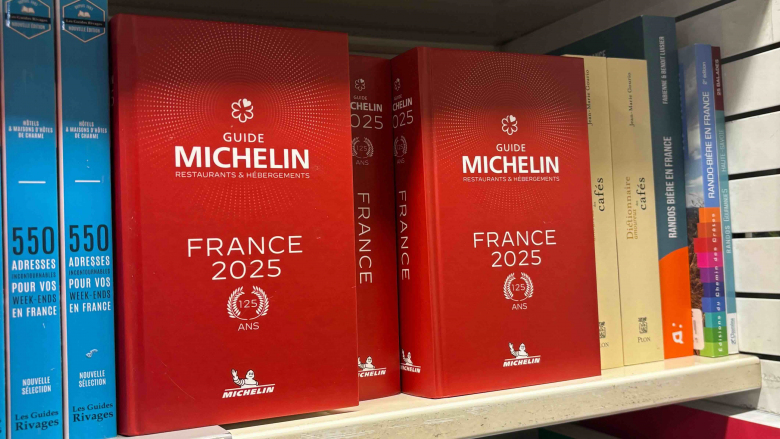
Tourism boards investing millions in their Michelin Guides
It seems that one of the first Michelin Guides produced as a result of a country’s sponsorship was Thailand, in 2017. Media reported that the Tourism Authority of Thailand (TAT) paid $4 million USD for the first five-year deal. And in 2021, the Thai government approved another $4.1 million USD to cover the guides from 2022 to 2026. As Thailand’s The Nation newspaper wrote:
“TAT will pay Michelin Travel Partner France Ltd $820,000 per year to publish and promote Michelin Guide Thailand, a travel guide for famous restaurants in various provinces around the country, including Bangkok, Chiang Mai, Phuket, Phang-nga and Ayutthaya. The company is obligated to survey restaurants in at least three more provinces, one of which will be in the northeast.”
After that, the gates were open for business.

Michelin has launched numerous new restaurant guides across the globe. And some of the partnership fees have been reported along the way: in the US, California was the first new guide in 2019, with a reported $600,000 USD payout by Visit California. Atlanta is said to have paid $1 million USD. Others have apparently declined to take part, such as Virginia, where the fee was cited as $120,000 USD per year, for three years. Internationally, the fees have been reported as even higher.
As it continues to court tourism organisations, Michelin points to a study by EY (formerly Ernst & Young) claiming that “76% of travellers are prepared to extend their stay to enjoy an experience in a restaurant recommended” by the Guide. And that “82% of chefs report an increase in their turnover after receiving a distinction.”
Some omissions have become well known, Australia being the prime example: according to media reports, Australia last year turned down a five-year deal that would have paid Michelin $40 million AUD (a whopping $26 million USD).
This all takes us back to the newest Michelin distinction: the Michelin Grape.
Why three Michelin Grapes?
In December 2025, Michelin announced that their new wine rating system will focus on wine producers rather than individual wines. Wine estates will be ranked according to five criteria and can earn a mention or one, two or three Michelin Grapes.
Wine folk have queried the logic of this three-grape ranking – how can you rate a wine estate that way rather than by its wines? As I see it, there are three good reasons.
First, it is in line with the way Michelin already rates restaurants and hotels.
Second, this is already a well-established way to rank wineries in France – both La Revue du vin de France and Bettane et Desseauve publish yearly books that classify estates with mentions and stars, as well as ratings on individual wines.
Third, it aligns the business model of wine ratings with the Michelin Guide model for restaurant reviews.
Taking the above into consideration, we arrive at a conclusion.
The business model of the Michelin Grapes
At some point during 2026, the first Michelin Grapes for the wine regions of Bordeaux and Burgundy will be published. With these in the bag, it’s easy to project that Michelin will soon start courting other wine regions, to ask if they would like to be presented like the benchmarks of Bordeaux and Burgundy within the Michelin universe. For a reasonable fee of course.
In a wine industry desperately looking for good news and already swimming in 90+ wine scores, a Michelin endorsement and exciting galas coming to their region might look very appetising.
So, dear wine region executive: if you see a +33 number showing up on your caller ID, you know who might be on the other end of the line.
What about the integrity of the Michelin Grapes?
In the case of Michelin’s restaurant guides, the beauty of the partnership model with tourism boards is that it provides funding for inspectors but still gives complete independence to the reviewing process. Some people have expressed suspicions around this. I, for one, have a lot of trust in the impartiality of the Michelin Guide's reviews.
The same will go for the Michelin Grapes: with funding from regions (or countries, or combinations of them) going to the company, the Michelin teams on the ground will be free to judge the wines and wineries as they like. I am confident they will employ top experts for this and, even though judging of any sort is always subjective, I am sure it will be done fairly. And just like for the Michelin Guide, the Michelin Grape selections (and omissions) will get us talking about them.
So, what will happen to The Wine Advocate?
Now, that is a good question. Interestingly, the press release for the Michelin Grapes did not mention The Wine Advocate at all.
When the Austrian winemakers gather for the next summit at Grafenegg Castle, in September 2026, will Stephan Reinhart’s scores go into the new Michelin Grapes (if Austria or its regions pay for it), or the Wine Advocate? Or both?
The Wine Advocate’s brand, business and community are surely too strong for Michelin to consider closing it. Therefore it will probably live on as a niche part of the Michelin empire, just like Tablet and Le Fooding.
Time will tell.
—
Thank you for reading. What do you think? Join the conversation on LinkedIn, or email me directly with your thoughts.
While you’re here, why don’t you check out the rest of Star Wine List, the guide to great wine bars and wine restaurants as recommended by sommeliers and other wine experts? We post regular stories from around the world, with a map view of the best spots for global wine lovers.
The Star Wine List Pro membership allows you to search 3000+ top wine lists around the world.
Sign up to our newsletter for all the latest updates.
Cheers!
Search like a Pro – explore 3,500+ wine lists