

What are sommeliers looking for in 2026? The Wine Paris panel
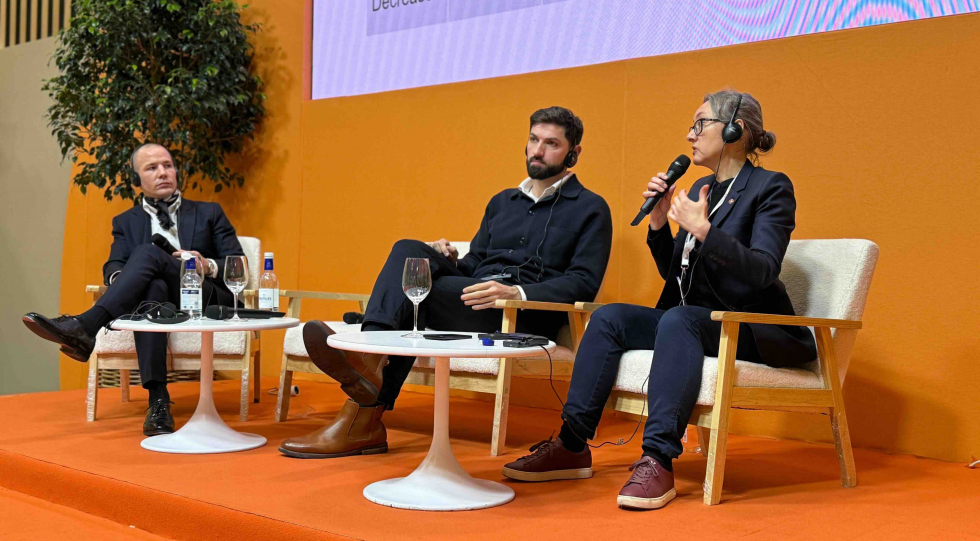

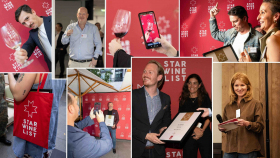
At this year’s Wine Paris trade fair, Star Wine List’s Krister Bengtsson called on three illustrious French sommeliers to see what they think wine lists will look like over the coming year, using feedback from the global Star Wine List sommelier community.
What do sommeliers think wine lists will look like in 2026? We asked our network for their thoughts this new year, and put those to an esteemed panel at Wine Paris on 10th February to see if their experiences tallied up.
It seems that value is front and centre of people’s minds, and our speakers delved into their various means of fulfilling that notion: adjusting margins (perhaps, and sometimes especially, on higher-end wines); offering larger choices by the glass; investing in elements of service that will enhance the overall experience for guests; listening to guests’ needs more keenly than ever.
With unrest disrupting global markets, bottle sales down, and consumers with differing understandings – and expectations – of pricing, the debate over what value even means will rage on. But it’s all fuelled by the fundamental question of what guests truly want and, then, working out how sommelier teams can give that to them.
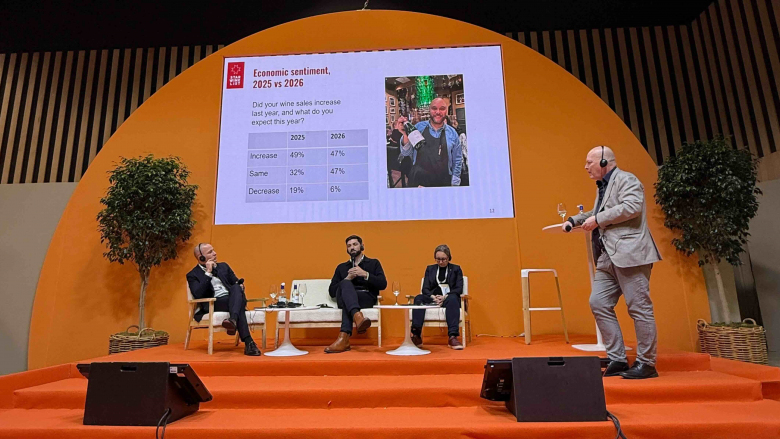
The speakers
The combined experience of our three sommelier speakers spans restaurants and bars across the world, of all styles.
Loire-born Pascaline Lepeltier is the Beverage Director at Chambers restaurant in New York, which she opened in 2022. She has garnered respect all over the world through her sustainable yet enterprising ethos, including during her decade with the Rouge Tomate group, and then Racines NY. An experienced author who will also be competing in the ASI Best Sommelier of the World competition this autumn, Pascaline has sat on many jury panels for Star Wine List of the Year events around the world.
Pierre Vila Palleja is Star Wine List’s Paris Ambassador and runs Let Petit Sommelier in Montparnasse – a buzzing bistro that he took over from his father in 2015, quickly turning it into a wine destination. He has an intricate understanding of the Parisian restaurant scene.
Master Sommelier Paul Robineau earned his stripes at 110 de Taillevent in London before moving back to France in 2022 to take responsibility for the whole Gardinier group; he is currently Wine and Spirits Director, and living in Paris. He spoke to us predominantly about the Michelin-starred Le Taillevent in the ninth arrondissement.
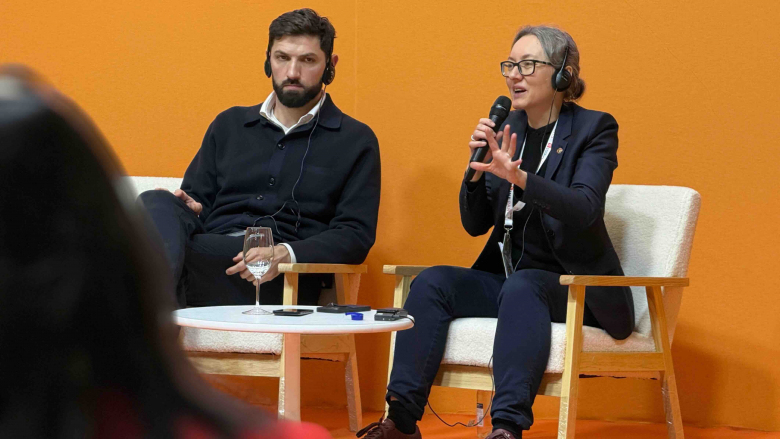
The research - a sample
Questions were sent to a selection of Star Wine List’s network of sommeliers, asking them for their predictions for 2026 regarding guest habits, major trends, and commercial performance. Responses came from a mix of casual and fine dining restaurants in the USA, Asia, South Africa, Australia and many from Europe, with the results serving as topics for the panel to discuss.
Nearly half of the venues (49%) saw an increase in wine sales during 2025, with many saying that sales remained about the same as previous years and 19% seeing a decrease. For the coming year, there is a hopeful mood since opinion is split between expecting sales to go up or remain level (47% each), with just 6% forecasting a decrease. (Please note that the survey was qualitative rather than quantitative; the results cannot serve as statistics for the whole Star Wine List universe, or restaurants and wine bars at large.)
WINE BUYING
Most important factors
– Taste profile
– Price point/value
– Viticultural and winemaking standards
What are you looking to add to your list this year?
– Jura
– Burgundy
– Smaller regions (“more unique regions”, “wines off the beaten track”, “emerging wine countries”, “under-valued wines from lesser-known regions”)
– “Boutique” wines
– Non-alcoholic wines
– Complex wines under €100 (list price)
– “A+ domaines”
GUEST HABITS
What are guests asking for in particular?
– Champagne
– Burgundy
– Italy
– Bordeaux
– Sparkling wines
– “Classics”
– Familiar brand names
– Value
– Chardonnay
– Pinot Noir
– Dry whites: New Zealand Sauvignon Blanc, German Riesling, Austrian whites
What trends do you think you’ll see in 2026?
– Value for money / correct pricing
– No- and low-alcohol wines
– Alternative sparkling styles
– Quality over quantity
– Fewer bottle sales; more sold by the glass
– Less Burgundy
– Fewer “blue-chip collectables at $500”
– More refined natural and low-intervention wines (“less funk, more finesse”)
First off, let’s see how last year went. How was 2025?
- An excellent year for Pascaline in New York was made possible by forward planning, which included revising the restaurant’s opening hours, staffing, and by-the-glass offering.
- Pierre saw a slight downturn in revenue and a disconnect between what those in the wine industry – and those outside of it – are seeking on lists.
- With a Burgundy-heavy list and prices only increasing for wine from that region, Paul has had to revise his margins to meet guests’ expectations over pricing, and offer more premium wines by the glass.
Pascaline: “2025 was the best year for beverage sales. Wine sales were stable, despite the fact that I added, for the last quarter, two more days of business. So ultimately, I saw a decrease in bottle sales, which was sort of swallowed by two more days of sales. But I tripled by-the-glass sales, and I did that by moving from having 20 options to having more than 40 options, and with higher-end by-the-glass sales. I saw a tripling of sales in non-alcoholic in 2025 and an increase in my cocktail sales. So overall it’s a plus, but it required a lot of adaptation and a lot of real seeing what was going on to add value.”
Pierre: “2025 was a bit lower in terms of revenue but, in terms of volume, it was about the same. It’s a French trend that its wines are considered too expensive compared to Italy and Spain, so I wanted to bring more bargains to my wine list. On the other hand, during Wine Paris, with my bistro close to here, this is maybe among the best revenues per day that I make because all the wine industry comes into my place – luckily. One lesson out of this is that sometimes we don’t divide enough between what the real guests want and what us, as wine professionals, think and see because we are not the market.”
Paul: “2025 has been very good in terms of pure revenue. The first few months were difficult but, from May, we’ve seen a big increase in sales; from May to December in our places, it’s always full and busy. Taillevent is an institution in Paris, so it’s not like Pierre and Pascaline where it’s my [own] place. I have a choice of giving a philosophy to the restaurant, and buying its wines, but I won’t be there for life, so we need to keep the history of the place as well. Burgundy accounts for maybe 70% of the list, but this has changed a lot over the past five years in terms of prices. But guests don’t want to see the impact of the pricing on the wine lists – they don’t understand and they need to understand. 18 months ago, we took a turn by lowering our margin big time. So it was difficult to understand for my owners, as we have good allocations, but I want people to drink the wines rather than just keeping the wines at the same price and being a museum – we still want to keep wines long-term and buy vintages, but at least stock is moving and people can enjoy top wines at a good prices.
“And we are going more premium on wines by the glass, like Pascaline. Of course, hidden gems and rising stars are important but, as a brand, the classics are important.”

Time for a crystal ball: what’s coming in 2026?
- Pascaline notes the uncertainty surrounding the wine trade owing to the current political climate in the USA.
- Pierre sees a different side to that, over in Paris, but remains focused on pricing.
- Paul understands that much of Le Taillevent’s success is dependent on retaining its two Michelin stars, and wants to maintain considerations of both food and wine in harmony.
Pascaline: “Right now nobody knows what’s going to happen. The difficulty for the market in the US is the inconsistency of the politics. There are way less people travelling to the USA, because of both price and perspective. So the large increase in my restaurant is, thankfully, due to the earlier focus on being more domestic. But with the aggressive politics of the US to play against the Euro and the absolute craziness of having overnight an increase in tariffs, etc., for me, it’s about how to be robust, how to adapt, how to understand what there is right now. On my side, it’s working even more with my importer and my distributor, considering things that may have been overlooked before – because before, we were spoiled but now it’s more complicated. It’s going to be about adaptability, understanding what the guests want, but going at the right price. But in the US it’s a question mark, and instability is never a good idea.
Pierre: “Paris is quite different. The US’ bad luck can be good for us because American tourists then think it’s quite cheap here. And we have so many options in terms of Michelin star restaurants and bistros, so I think pricing is the key. People want to drink but people are thinking ‘What’s good value for everybody?’ Even water. What I try to do is be always a bit under the market for many top wines.
“Then the French market is quite different because French people, they don’t look for what would be good value outside of France – value is more linked to appellations or estates that are really appealing, and we have to source based on this. So I’m quite confident for 2026 but pricing will be key.”
Paul: “Well 2026 depends on Michelin – if we lose a star it will decrease because people will not come as much as before. We are a restaurant for wine but also for food – we must not forget that people are coming to eat! Like Pierre, the prices of our wines here mean I have people from the US telling me, ‘It would be cheaper to take a plane to France to eat at Taillevent!’ I think the key will be the prices. People are still travelling but people are not going out as before. So fingers crossed.”

We keep coming back to the idea of value, and the word came up a lot in our questionnaire answers. What does that mean to you for this year?
- It’s clear that guests come in with a budget that they want to stick to, according to Pascaline, so it’s a case of making wine a sensible option alongside cocktails, primarily through the by-the-glass programme, and understanding that the big brand names offer less value.
- Pierre agrees that perceptions of prices are shifting among guests, and notes that staffing costs account for the largest part of the wines’ end-price – which guests often don’t realise.
- Paul concurs, with much resource at his group going into training and mentoring staff.
Pascaline: “I’m making less money on my margin directly but I need to make as much money on the restaurant overall. And brands and names are less valuable than before because of where they went in the last couple of years. I’m trying to cover all my ranges and I’m focusing on the top, where I take the smallest margin – really encouraging people to drink wine, to choose the top wines and [I] take less dollars.
“We definitely see people choosing to have two cocktails, and there is just not the same perception of pricing in alcohols as drinking wine, so I still want to be a place where people drink wine (and not have two cocktails instead). Premium-premium wines take a hit on margin but at least I sell that bottle. People can’t come and spend whatever – I think they come to my restaurant with a budget and they don’t want to go over, so how do you match that with them having something good?”
Pierre: “I’m definitely on your side. Just after Covid, we could have sold anything at any price because people wanted anything. But for my restaurant, we have a lot of French people and there was turning point maybe a year and half ago where they say, “I don’t want to pay these prices any more.’ People were even negotiating the prices of the bottles at the restaurant. I was like, ‘Oof, ok this is changing, we have to adapt. Are all my prices wrong? Or are just the perceptions of the wine altering?’
“Actually, thanks to Star Wine List, we can see wine lists from many places and markets – I think we should pay more attention to other restaurants. I do that. I say, ‘Ok, what’s the average price for this type of wine?’ because the client does that. He goes and Googles and double checks everything all the time, so I took this habit and I think it’s very important. When I look at my charges, the first is not wine or food, it’s payroll – we had to raise all the salaries for everybody otherwise we’d be missing staff, and at my place it’s 35%. So when you’re paying a 100-Euro bill, the first cost would be the staff and people don’t think about it. There is today no link between the wine, and the wine that is served. And we have to understand the people don’t get it – they don’t care. They just see a wine on a website for this price point. We have to adapt.”
Paul: “I agree very much. By teaching, training people, that is key. Money is part of it but, on top, every month we take [staff members] to vineyards in France or elsewhere. Money is important but training and spending time with them too.”
Pascaline: “I’m seeing that what is very important is service. So right now, there are always two sommeliers on the floor in my restaurant because I want to provide the service that justifies the prices that I’m charging. So I invested in one more person on the floor. And we continue to invest in glassware, to [allow me to] say ‘Ok, if you come to my restaurant, you could probably buy some of the wine at the shop down the street and you’ll probably play less, but when you come here, I have trained staff, I have a curated list, we are providing on top of that a service, and our service can be finding you vintages from a private collections, and so on.’ We are a discovery place, so I’m also providing the service of my expertise of tasting all these wines and choosing one for you, that you’ve never heard of.
“Also trying to pay people the right price and train people – as sommeliers we have to be good buyers and very curious but, more than ever, we need to be good managers.”
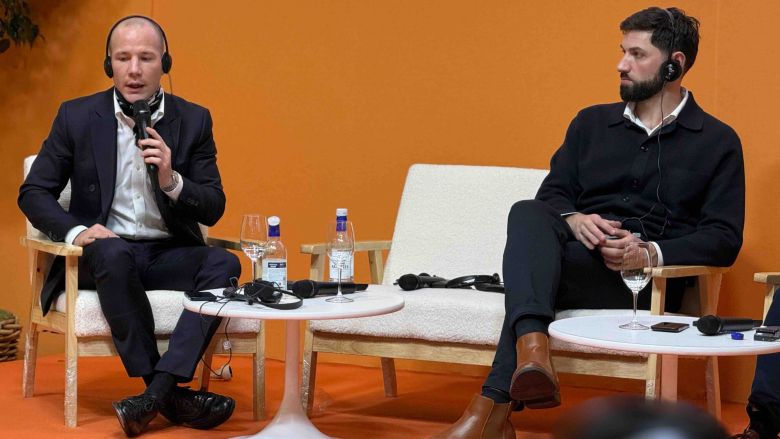
We had many references to natural and low-intervention wines in our feedback, with the suggestion that 2026 will see “less funk, more finesse”. Pascaline, do you think this will come true?
Pascaline: Probably, because some of the discovery time for a lot of people is past. Some people are more behind than others but I know that this style of wine would be great for them. I’ve been selling way less pét-nat and way more Cremant or traditional method and Champagne – from people I’ve known for a long time, they love low-intervention wine but their taste is moving. I’m seeing a decrease in the need for maceration and skin contact – four years ago, I would have guests asking spontaneously for it and, today, it’s like me suggesting that they should go for it. So there’s a development of this type of drinkers, and they are more attuned to their own tastes.”
What’s going to happen to fine wine in 2026, Paul? And what does ‘fine wine’ mean these days?
Paul: “Fine wine is not only Bordeaux and Burgundy as it used to be 20 and 30 years ago. It’s about winemakers especially. Even people that come to Taillevent nowadays, we have some who know what they want to drink and that’s it, but more and more people that have money, they used to drink something and want you to suggest something that will feel like that. And then it’s about a sense of place, a terroir – not just a region.”
Lesser-known grape varieties seem to be on the up. Pierre, do you find this among your guests?
Pierre: “For the French market, well, we have to divide. When you have the everyday person that doesn’t know anything about wine, they don’t really think about the grapes – they are more linked to the appellations. I call them now “brand appeallations” – Chablis, Sancerre, Barolo – regions usually linked to a style and quality and a price point. And then you have all the people who are really gastro-minded in general – they can look at the classic appellations and then take the good idea or rising stars suggested by the sommeliers.”
Search like a Pro – explore 3,500+ wine lists