

Oddbird C – a premium, de-alcoholised blend of Chardonnay, Pinot Noir and Meunier
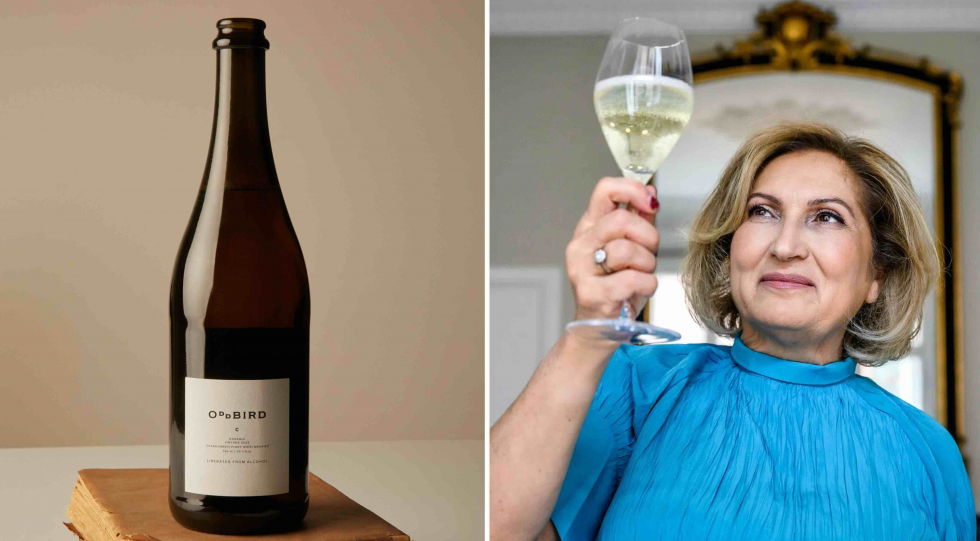

Oddbird’s trail-blazing de-alcoholised wines are helping to reshape the low- and no-alcohol wine category. Founder Moa Gürbüzer introduces us to Oddbird C, a fine sparkling cuvée inspired by the traditions of Champagne.
Founded in 2013, Oddbird has become one of the world’s top producers of premium wines “liberated from alcohol”, as they put it. The company was created by Moa Gürbüzer, a former therapist with over two decades’ experience and a mission to transform our drinking culture.
Now, Oddbird has released a brand new cuvée and the first of its kind: a premium, organic sparkling wine inspired by the great Champagnes. Made from Chardonnay, Pinot Noir and Meunier grapes from the 2022 vintage, Oddbird C™ is a project six years in the making and now available, in exclusively limited quantities. It came onto the market in December and is already making waves. A waiting list can be joined online for those keen to get their hands on a bottle.
Rethinking de-alcoholised wines
Throughout more than 20 years spent as a family therapist, Moa Gürbüzer worked closely with individuals and families affected by alcohol. Over time, she saw the same patterns repeat themselves – the same dynamics, the same situations, the same outcomes, often carried quietly across households and generations.
In that work, the responsibility to change was almost always placed on the individual. The expectation was that people should adjust their behaviour, while the broader structures around them remained the same. Social norms, expectations, and environments continued to reinforce the role alcohol played, making it difficult to step away, even when there was a desire to do so.
After years of working within that system, it became clear that the issue could not be addressed at the level of the individual alone. The patterns were sustained by something larger. Continuing to work only with the consequences meant returning to the same starting point, again and again.
Oddbird was founded in 2013 from that realisation. Rather than approaching alcohol as an individual problem, the ambition was to engage with the structures around it, and to contribute to a shift in how wine and drinking are understood in a social and cultural context.
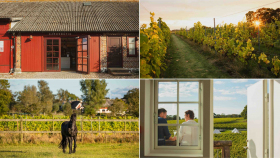
Today, Oddbird is a wine house dedicated exclusively to wines “liberated” from alcohol. The wines are developed in close collaboration with growers across Europe, who are selected not only for their locations, but based on how they approach their vineyards over time; a strong focus is placed on soil, biodiversity, and the integrity of the craft. Many of the sites are made up of mature vines – some over 50 years old, others approaching a century – contributing depth and balance to the wines from the outset.
“We look for partners who share our way of thinking about winemaking,” says Moa. “That means respecting both tradition and innovation, and taking a long-term approach to the vineyard, where soil health, biodiversity, and the surrounding ecosystem are essential to the quality of the wine. Our selection is as much philosophical as it is geographical, built on a shared commitment to quality and the integrity of the craft. From there, it becomes a close collaboration over time, where we shape the wines together and how they evolve."
This work is supported by Oddbird’s research center in Alsace, where the relationship between viticulture, structure, and sensory perception is studied across the entire process, feeding directly back into how the wines are developed each year.
All of Oddbird’s wines are conceptualised with the express intention of having the alcohol removed. “This guides every single step in the process,” explains Moa. “Fermentation is carefully managed to build structure, acidity, and aromatic definition, allowing the wine to undergo de-alcoholisation without losing personality or integrity. We’ve learned that starting with a complete, expressive wine is essential – there are no shortcuts when it comes to quality in de-alcoholised wine.”
Inspired by the finest sparkling wines of the world
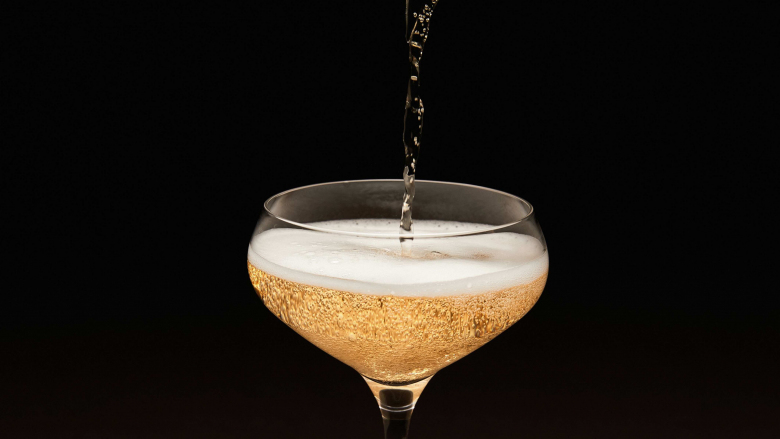
Oddbird C™ is made from Chardonnay, Pinot Noir and Meunier grapes grown in the Grand Est region of France. Fermented in stainless steel tanks, the wine is subsequently aged on lees for two years “to build texture and complexity while preserving freshness and precision.”
Floral and red berry notes are accompanied by a creamy texture, a citrus lift and gentle toasted aromas, with a long finish and “balanced sweetness”.
We asked Moa about the creative process.
Why did you want to make a Champagne-style blend?
“From the beginning, the idea was to offer the alcohol-free category a wine that represents the highest level of quality and helps raise the standard of what alcohol-free wine can be. At the same time, we wanted to explore one of the most technically demanding and culturally significant wine styles in the world and reinterpret it without alcohol, without compromise.
“Champagne-style wines rely heavily on balance, precision, acidity, and texture rather than overt alcohol warmth, which makes them a particularly compelling challenge for alcohol-free winemaking. For us, it was about proving that complexity, tension, and elegance can still exist when alcohol is removed.”
What styles of Champagne did you hope to emulate with C?
“We were inspired by dry, precise, and structured Champagne styles – wines with tension, freshness, and depth rather than sweetness or overt richness. The aim was to create a wine that feels serious and gastronomic, with elegance, balance, and a clear sense of restraint.”
What was interesting about the 2022 vintage?
“The 2022 vintage delivered excellent ripeness alongside well-preserved natural acidity. This combination gave us fruit with both concentration and freshness, which is essential for creating a complex, balanced alcohol-free sparkling wine that retains structure and character.”
How many bottles of C have been produced in total?
“C is produced in some thousands of bottles, keeping it firmly in the realm of limited production. Quality takes priority over volume, and this scale allows us to maintain close control throughout the process and ensure the wine meets our highest standards.”
Search like a Pro – explore 3,500+ wine lists
Oddbird

We produce quality wines, made with traditional methods and matured for up to 12 months, and then gently liberated from alcohol in order to preserve the flavors nature intended.