

5 myths about sustainability – busted
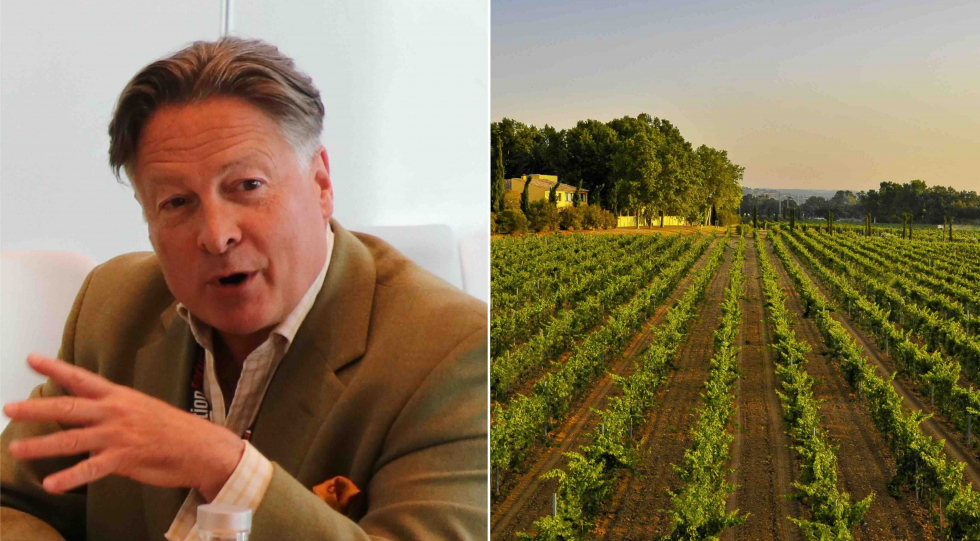

Sustainability is more than just a buzz word – it’s a crucial issue for the global wine industry and, by extension, for the sommelier community. And yet it’s fiendishly difficult to define, let alone work into a wine program. So what are the fundamentals? We speak to Dr Peter Stanbury of the Sustainability Wine Roundtable to dispel some of the greatest misconceptions.
We get it. Sustainability is tough to get one’s head around. Once you’ve delved into the agricultural issues to learn what options winemakers have in the vineyards, there’s the question of what happens in the winery and how each company operates across all areas of its business, from supporting local communities and economies to packaging, shipping and more.
And as those wines make their way into restaurants, how can sommeliers do their part? What should they be looking for in the wines they buy, and how should those wines be sourced?
It’s a veritable minefield, and reliable information can be hard to come by.
For this very reason, Tobias Webb began a global conversation on the topic of sustainability, in 2020. Today, the Sustainability Wine Roundtable is an organisation with over 130 members sitting along every step of the wine value chain, from growers and producers of all sizes through to retailers, standards bodies, cork, closure and bottle makers, and so on. The idea is to share information and lead research to develop and convey best practice.
“When it was set up, it was very much a kind of online talking shop,” says Research Director Dr Peter Stanbury, “and I don't mean that pejoratively. As in, it was about bringing together people who are doing sustainability in different parts of wine, so they can chat together, which got us so far. Then we said, ‘Well, rather than reporting on the agenda, why don't we drive it?’ So we're doing that.
“We've been developing that space for the last three years, and we're now developing our infrastructure to be much more measured around how we interact with our members and that sort of thing.”
It’s confusing as hell
The Sustainability Wine Roundtable has created what it calls a ‘Global Reference Framework’ to help benchmark standards so that the industry – and consumers – can start to understand what sustainability truly means. That framework is updated annually, to reflect the constantly changing knowledge base and its practical implications.
“Sustainability is one of those things which requires a collective approach. You can’t have a vineyard that says it wants to be sustainable in the middle of a whole bunch of others that don’t. So there is a need for collaboration,” says Peter.
“One of the big things worth focusing on at the moment is benchmarking all of the different wine sustainability standards, of which there's about 40. And how the hell does anyone know what any of that actually means?”
With Peter’s help, here’s what you should really be considering when it comes to the prevailing beliefs around sustainability today:
MYTH #1
‘Sustainability’ is a definable term
Wines and businesses may proudly claim to be ‘sustainable’ but the term itself is hugely complex, making the very description of something as ‘sustainable’ potentially misleading. Caveats – and greater nuance – are required.
The solution?
Consider the entire ecosystem of wine on its journey from vineyard through to glass, improving your role in the areas over which you have control, evaluating the production and supply chains in ways that may not previously have occurred to you, and tempering your language to reflect the constantly evolving standards of sustainability. There is more to sustainability than having a neat motto to recite.
“The obvious myth is that you can use the word ‘sustainable.’ Okay, ‘wine on a credible journey to sustainability’ doesn’t quite fit so well on a label, but saying something is sustainable is not true – it can be as sustainable as it can be given what we currently know, but there's a whole bunch of stuff we don't yet know about sustainability. So, it could be that a grower is doing really well in the current areas, but not the rest.
“I think sustainability has to be seen as a journey. That's a horrible cliché, but when Gro Harlem Brundtland first defined ‘sustainable development’ back in 1987, it was something along the lines of ‘the ability for people to survive today without compromising the ability of people to do the same in the future.’ And at that stage, the focus was very much on tropical rainforests. But obviously, now, there's a whole bunch of other stuff we know about climate change – we know about water, rainfall changes, all of those things. So our role within wine is to say, ‘Well, let's define what we understand sustainability to be now, but recognise that that needs to be constantly modified.’
“The various topics are, what does sustainability look like in the vineyard? That's things like soil health, biodiversity; gradually, how do you increase climate resilience, for example, in new plantings or in the way you manage water? Whatever it might be. Then there's environmental practices in the winery, for example, how you can be more efficient in water use. Then there's the whole people and communities bit because there's been quite a lot of bad coverage of the wine sector for labour rights abuses, so there's that issue.
“But also there's the whole, how does a wine business relate to its local community? That's everything from giving back to the local community, but also basic stuff like making sure you're not doing lots of tractor movements at 10 o'clock on a Saturday night, for example. So that we also look at. And at the moment, most of the expertise within wine sits within that ‘until the factory gate’ piece but we need to think much more broadly. So there are issues around packaging – we do the work in packaging because anything up to half the carbon footprint of wine is the bottle it comes in. But it’s also about logistics – do you bottle at source? Do you bottle at market?”
MYTH #2
‘Drink local’ is the only answer
It’s common for restaurants to promote menus sourced exclusively from their locale, with many wine lists following suit. If we want to drink sustainably, is the only option to restrict our choices to wines made within a certain radius?
The solution?
Promote locally produced wines whilst acknowledging that wine is a global industry. With that in mind, take time to examine the logistics of how, and how often, wines are brought to your restaurant.
“This is where one just has to be completely pragmatic about it. Yes, you almost certainly do get some people that will say, ‘I wouldn't eat or drink anything that comes from further than a 10-mile radius of where I live.’ Blatantly, that's not practicable, so we have to recognise that, you know, I might this afternoon be quite happy to drink a bottle of Chapel Down [Peter is based in the UK], but actually, perhaps over Sunday lunch, I might want a Chilean red or a South African white because the Chenin Blancs are so fantastic. And therefore you have to work with the reality that that is the way the business is. So I think it is a question of how can we balance the fact that it's an international business with making the wines that we drink as sustainable as possible?
“That's why the logistics piece, about which there's very little known, becomes so important because, already, quite a lot of wines coming from places like New Zealand and Australia are bulk shipped and bottled over here in the UK. But that could be more. Also, there's some bits where bulk shipping doesn't necessarily work, but actually it's cheaper if you use train transport to take bottles rather than a ship, depending on what you're doing. That's where a piece of work we'll be working on from this autumn will be interesting, looking at how you stack up the pros and cons of different packaging types. And, obviously, the logistics aspect forms part of that.
“Just using the UK as an example, we visited the Encirc bottling site, which is up near Chester, and they do most of the bulk shipping, local bottling that happens in the UK. They're very cognisant of the onward logistics journey. So they mostly use rail transport to take the bulk of what they do to hubs, and then they try and reduce the need for road freight and, where there is a need for road freight, their aim is to try and use electric rather than diesel vehicles. So that's something that a restaurant could focus on and it wouldn’t just go for wine but for everything they bring in, especially the top-end restaurants where the focus will tend to be on local produce, thinking of the Michelin requirements – thinking about that last mile between their distributor and them.
“And again, over time, how can they optimise their buying in order to reduce the number of shipments?”
MYTH #3
All organic wines are sustainable
Trust has been built in the term ‘organic’ and many people assume that, if a wine is certified as such, it must automatically be sustainable. Yet the two terms are separate and one does not necessarily follow from the other. Ditto for other accreditations including biodynamic wines, B Corp certified companies, and so on.
The solution?
By all means take certifications into account, but scrutinise practices outside of those parameters – an organic vineyard can adhere to the rules of its certifying body whilst acting contrary to sustainable recommendations around carbon emissions, people management, and all manner of things. Use common sense and a holistic assessment to gauge how credibly a company or product could use the term ‘sustainable’ according to recent and trusted research, in addition to any other accolades they may have acquired.
“People like the idea of buying things that are nice and fuzzy and cuddly, and generally kind to furry animals and the planet and people, which is why they will tend to fixate onto things that seem to deliver that, like a Fairtrade label or the Rainforest Alliance label or the organic label.
“The term ‘organic’ has got to where it's seen as being this wonderful thing and the difficulty is, it ain’t. If you're in growing conditions where actually you don't need very many inputs in the first place, then it works brilliantly. If you're in central California where you've got wonderful conditions, you've got wonderful soil, you haven't got very much in the way of moisture, you haven't got very much in the way of prevailing problematic insects, you don't need much in the way of chemical input. And a lot of the stuff you might need, you can do through things like pheromone traps for pests and so on. But if you're in Northern Italy or Southern France, these last two years have been bloody difficult. If you've gone and sprayed, as one Prosecco video I saw last autumn had, they've done 28 tracks and then 28 sprays – that's 28 sprays of copper sulphate, which is pretty bloody noxious; also, that's 28 turning on the tractors, running up and down – all the carbon from that – plus you've got soil compaction. You know, organic does not equal sustainability.
“Organic? Okay. Because it's actually a difficult thing to do, it probably it means you've got a wine business which is aware of these issues but, on its own, an organic certification does not mean that wine is sustainable because I've seen plenty of organic wines which are in stupidly heavy bottles or don't bulk ship when they could.
“B Corp? Great. But again, it doesn't really tell you much other than this is a company which is probably reasonably well managed and is focused to a certain degree on the world around it. Brilliant. But does that mean to say that it's producing its wine in a sustainable way? Not necessarily, no. Because B Corp doesn't talk to that degree of specificity. So there's all of these other factors which need to be taken into account. And this is the challenge with sustainability – it's incredibly complicated.
“This is why we're doing the benchmarking because, at the moment, it's confusing as hell.”
MYTH #4
Sustainability stops in the vineyard
While the agricultural methods involved in producing a wine are key, there are many issues to be addressed in the winery, the broader business, the logistics of moving the products around the world, and so forth.
The solution?
Once again, scrutinise products, processes and companies comprehensively rather than in just one area. And then take action where you can. For example, by favouring wines that come in lighter bottles, or not in bottles at all; buying wines strategically according to transportation methods and number of shipments, also reducing the amount of deliveries your wines take to bring in, and so on. Don't forget that up to 50% of a wine's total carbon footprint is down to the bottle it comes in.
“An obvious myth is the packaging format. Notwithstanding that we've kind of debunked the presumption that a heavy bottle is perceived by consumers as meaning better quality of wine – that's not true; it is true for certain bits of certain markets and certain demographics, but it is not a universal truth – there’s probably more that the industry can do in terms of moving away from a predominance of glass bottles to other formats. The ability for the on-trade to not need bottles, but to actually bring it in in bulk could be transformational because it’s an area where the industry doesn’t necessarily need bottles, at least not universally. So, that's one way in which a significant change could be made.
“When it comes to the packaging question, you could have, even now, a wine list of wines which are compliant with the Bottle Weight Accord, and you could have a thing on a wine list which would say, ‘Right, all of these wines are from wineries signed up to Bottle Weight Accord. Therefore they are, from an environmental perspective, more sustainable than others because they're in a lighter bottle.’ So there's things like that where you can make it more simple for people.
“And then also there's that last mile piece of how wines get to a restaurant – the onward logistics journey. Then, over time, how can they optimise their buying in order to reduce the number of shipments? That would be another thing.”
MYTH #5
Sustainability shouldn’t affect prices
Many people would like to consume goods that are sustainably made and, yet, the inflated price of such products can be a deterrent. It’s a quandary without a neat (or necessarily attractive) answer.
The solution?
Be realistic about the cost of supporting sustainable businesses and employing your own sustainable practices – on both internal budgets and the prices reflected to customers. It will require a commitment, not just financial but also of time and resource, to do research and come to your own decisions. This is the trade off for supporting an industry that will, hopefully, sustain over time; ensuring that your front-of-house team understands the complexities of the topic will allow for more honest and productive conversations with guests.
“There was a great piece of work that Oxfam did about three years ago in the UK looking at consumer behaviours. So they interviewed people as they went into a supermarket and asked, ‘To what extent do sustainability issues form part of your buying decisions?’ Something like 81% of people said, ‘Yes, of course they do.’ But then they looked at how many people had actually taken sustainability factors into account when they bought stuff and it was 11%. So expectation versus performance is quite markedly different.
“Funnily enough, there was a very interesting interview with a young woman who runs a new clothing brand, on Woman's Hour the other day. And she was saying, ‘How can you actually produce a T-shirt that's sustainably made – as in, environmentally friendly – and pays people properly, and expect to get it in a store in the UK for tenner?’ It simply doesn't stack up.”
Visit the Sustainability Wine Roundtable website for more information.
Search like a Pro – explore 3,500+ wine lists