

Pascaline Lepeltier’s “best year ever” at Chambers – including a global Gold Star
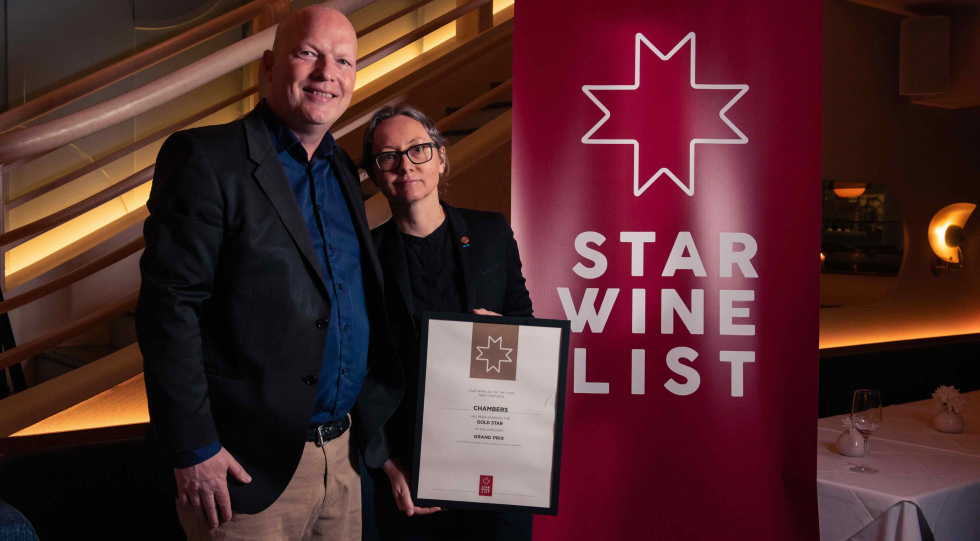

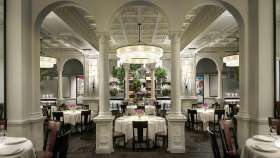
Pascaline Lepeltier rarely needs an introduction in sommelier circles. The renowned French sommelier took the global Gold Star for Sustainable Wine List of the Year at the Star Wine List of the Year International Final 2025 for her work at Chambers, in New York’s Tribeca, after dominating our regional competition in the US state. And we are lucky enough to have got her insights into not just her win, but her wine list, wine philosophy and the nebulous topic of sustainability itself.
Ask Pascaline Lepeltier about sustainability in today’s climate (political or otherwise) and, make no mistake, you’ll feel the full force of the sommelier’s vexation.
“It’s a catastrophe,” she tells us from her home in New York. “Sustainability is about giving the kids a tomorrow. It's really about that – a possibility for tomorrow. And right now it's like, ‘Let's burn it down to the ground and make as much money as possible.’ So let's fight.”
That means going “even more against the stream – politically, financially, socially.” And this is someone who doesn’t just have fire in her belly around the subject, but a wealth of experience with which to back it up.
A Star Wine List of the Year veteran
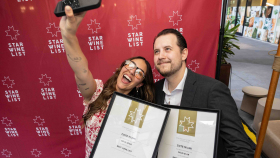
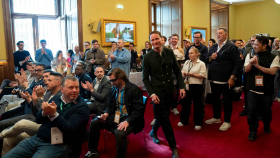
Pascaline’s Gold Star at the Star Wine List of the Year International Final (following three in New York) was hardly a surprise to the gathered audience at the awards ceremony in Vienna this June, since she also took Gold in the same category at last year’s global event, in Stockholm; and again in 2023, when Chambers was awarded the Special Jury Prize for its efforts towards sustainability.
“It's always a very big boost for the team,” she says of the accolades. “It's a motivation to continue to go in that path and to say, ‘Okay, yeah, it's more work, it's more time, it's way more research on every single bottle. But the reward at the end is real because people are coming to look at this list too.’
“We have so many industry people, we have so many regulars coming, and every bottle sparks a conversation – every bottle. And there is a lot of pleasure with people drinking. So I'm like, ‘Okay, I'm onto something. Let's push more.’”
Having been involved with Star Wine List for many years, Pascaline is an integral part of its global community – something she relishes and relies on.
“This is very important – to constantly nourish yourself from what's being done outside – and it's why Star Wine List is so important to create these networks, having us inspired by the work of other people. And you're like, ‘Oh, that's great! I hadn't thought I could do that.’ Otherwise, the burden can become heavy and then you get swallowed by just the day's pragmatic necessity. So this is also why Star Wine List is very important for me, because you get inspiration from other people, and you can push further – that's really cool.”
A sustainable start
Pascaline began her wine journey in the Loire, having switched attention from her philosophy studies after a mind-bending experience with a bottle of 1937 Château d’Yquem. Living in Angers (“a hub for natural and organic wine”), she benefitted from a teacher focused on the farming perspective whilst training at the two-Michelin-starred L’Auberge Bretonne. It was a dual vinous education, incorporating “verticals of DRC, of Leroy, Leflaive, everything you want” on the one hand, and boots on the ground on the other. Her mother also, rather usefully, taught botany.
Ten years spent with the Rouge Tomate group started in Brussels, eventually leading her to New York, and required her to develop, test and implement a 360-degree view of sustainability by working with a team of nutritionists and scientists to pull together a “beverage charter” with a focus on nutrition.
“It was not a preaching school,” she says, “it was really just a very good restaurant – we had a Michelin star in New York. So this is my journey into wine, and I think my past philosophy background led me to also always being quite inquisitive and to really understand value systems behind things.
“The fact that I've been educated and my knowledge about wine has been extremely driven and helped and mentored by a lot of people working in organic and biodynamic farming, in sustainability in general, and then this project in New York – it put everything together. And I think I had a pretty good understanding of what does [sustainability] really mean – the financial limits, the economical limits, the decisions you have to make, what can be done on a consistent basis, what really matters, what are the real questions behind it, the complexity of the problem, the variability between countries (because Belgium is not France, is not the US), the legals behind it, you know.”
Racines NY followed in 2018 and, ultimately, Chambers restaurant, which opened in June 2022. Along the way, Pascaline has released a phenomenally reviewed book (One Thousand Vines: A New Way to Understand Wine) and earned the titles of Master Sommelier, Meilleur Ouvrier de France in the sommelier category, Best Sommelier of France 2018, and Personality of the Year 2019 from La Revue du vin de France. She also makes wine upstate in Finger Lakes, with Nathan Kendall. And she occasionally judges for Star Wine List, of course (in regions separate to those in which she works or has professional interests).
Sustainable Wine List of the Year 2025
During this year’s International Final, judge Valeria Gamper praised the Chambers wine list for going “beyond selecting wines from responsible farming and implementing recycling programs – they've integrated sustainability into every aspect of their operations. They lead by example, embracing social sustainability practices that start with their own team. A great model for others to follow. Bravo!”
This Gold Star wine list begins with a manifesto – firm, pragmatic, passionate, thoughtful – stating the restaurant’s ethos (you can read it via their profile page). And while Pascaline understands that guests do not come “to be preached” at, at a restaurant, her staff – both food servers and sommeliers – are versed in what they are collectively trying to do.
“If there is any question, we are here absolutely to answer,” she says. “And then it's building this trust.”
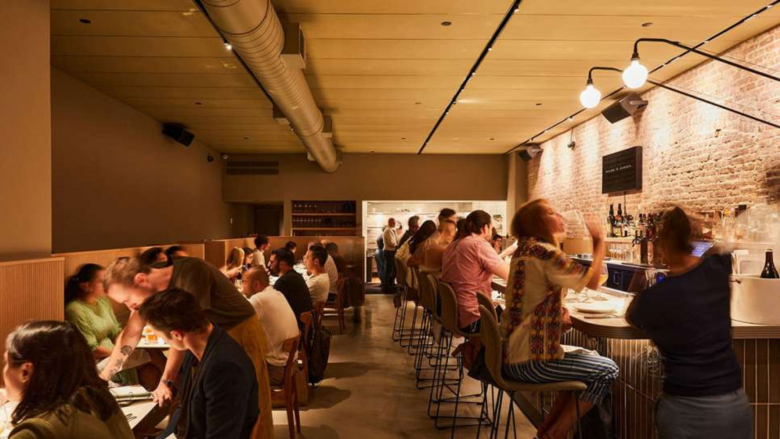
She points to some appreciable examples of their culture for guests (no tablecloths, tables made using particular materials, wine on draft, food sourced from a certain radius of the restaurant itself, etc.) and notes how her sommelier team get excited if they are able to serve a wine that they can talk proudly about. “My staff is behind it and we have always a little story to say,” she explains.
In terms of practical points, Pascaline’s sustainable considerations in her wine service include the following, as mentioned during our conversation:
Nutrition
Offering “a large breadth of alcohol content” since anything given to guests needs to be “as healthy and least dangerous as possible.” On that note: minimising the amount of sulphur, checking for additives and, above all, not working with ultra-processed wine (“it's exactly like ultra-processed food for me”).
Logistics
There are no tablecloths in Chambers, and the tables themselves are crafted out of a natural material that can be cleaned using water alone, thus reducing chemicals. Energy usage overall has been evaluated, along with the type of fridges installed and their energy consumption, plus that of other equipment and appliances. An effort is made to use recycled paper, and wine lists are not reprinted with excess. Time, space and money are devoted to a proper recycling program.
The question of bottles!
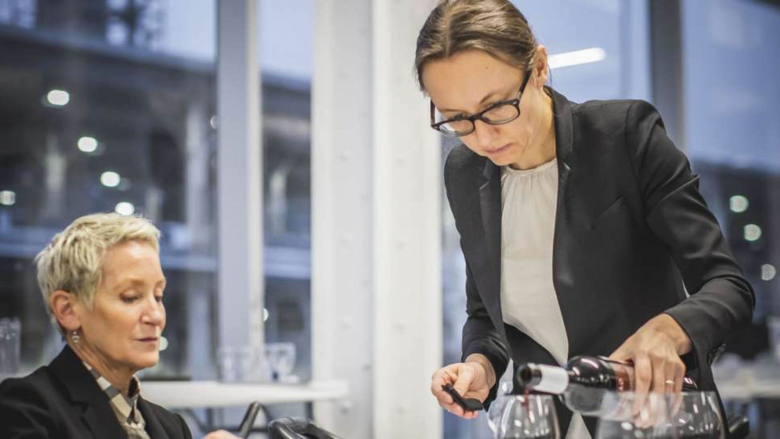
With bottles accounting for a massive percentage of wine’s carbon footprint, extensive efforts are made to reduce the number of bottles brought in (wine is served on draft, or from bag-in-box, and often put in special decanters to provide a sense of presentation – Pascaline’s friend, Caleb Ganzer of Compagnie des Vins Surnaturels has created one such); to reduce the number of shipments and the method by which any bottles are brought in (they work with a sailing boat company called Grain de Sail, which transports bottles to the US in batches, taking 21 days); to stop buying wines in particularly heavy bottles in favour of those that come in lighter ones; to recycle bottles, of course but, further, to reuse them – for example, Melissa Saunders MW has created a scheme whereby bottles are saved once empty, picked up, and returned to be used over again. “Every time I hear about an initiative like that, I'm well on it,” Pascaline says.
Practicality
Any change brought in must be considered in terms of its “practicality of work for the staff, because that's also very important. If you bring something in that makes the life of the staff harder, that's also not cool ... You need to find a balance.”
Sourcing wines
“Very selfishly, I'm trying to create a list that will make people want to drink wine,” Pascaline admits, “and to rediscover the incredible complexity of what wine can offer us. And so I indulge myself to have quite a broad wine list. So how do you compromise? It's always about compromising. So what I'm trying to showcase is a diversity of practices and to showcase the work of people that I think are going into the direction of sustainability on multiple levels where they are located.”
This means a notable selection from Northeast America (New York, Vermont, Virginia; Canada where possible) and supporting “the future of farming” in these regions by exhibiting hybrids, co-ferments and, again, bag-in-box wines since the packaging issue around locally sourced wines is important. It also means cider, since apple trees grow far better in the climate than Vitis vinifera.
When it comes to wines made further away, again, there is an element of compromise. But also (if judiciously selected) there is a real benefit to be wrought by producers whose businesses might receive a boost from the international exposure of being on the list at somewhere like Chambers – and Pascaline is keen to support those doing things in a sustainably dedicated way.
“I really see my little restaurant as a resonance box, where I know that if I put a wine on the list, it may have an impact on how that wine is perceived. And I wouldn't say a stamp of approval, but yeah. Because it happens to me multiple times when people are saying, ‘The fact that it's by-the-glass at Chambers, that's a validation,’ and suddenly that has an impact locally. Me, even though I'm thousands of miles away, even though it's a few bottles or a case, or two cases that are shown and talked about in New York, maybe that can reverberate locally and create that sustainable local economy, which is what I want at the end – I want to buy wine where I know what I'm buying is creating a local, sustainable economy. That's the most important thing.”
Pascaline mentions a failed attempt to have a “100% local list” at Rouge Tomate. “People, even New Yorkers, didn’t want to drink this wine,” she says. This means that her primary questions, when buying wines, become, “‘Where do I want to put the money?’ and ‘Do I want to put the money in an estate where I know they're going to create jobs, that there is a long-term sustainability project, that I know that the price is higher but is also to support certain things?’ And so on.”
Serving the wines
Markers are put on the Chambers wine list to note particular points (such as wines coming in by sailing boat), and the staff is always keen to have conversations with interested guests. Pascaline makes an effort to direct diners to wines from regions they may not have heard of or else considered “because there is incredible value” to be found, and from producers “dedicated to extremely high-level, quality wine – and sustainable wine.”
What’s next?
Chambers is transitioning from opening five days a week to the full seven and, as such, Pascaline’s sommelier team is doubling from two, to four.
“It’s our best year ever, we sold more wine than ever, so in a context of wine crisis, I can see that what we are trying to do – keeping prices reasonable, looking for what people don't know, nourishing the curiosity, doing that in a cool, humble way – that works. And I can see it’s going to work even more.”
She is excited to be welcoming new blood – and new knowledge, perspectives and dynamics – into her team: “my idea is that I wanted people that could teach me things, that we can go further together.”
Meanwhile up in Finger Lakes, where her winemaking project is based, the government is about to reauthorise fracking, meaning pollution for the lake – just one move that causes Pascaline to call the current situation “an absolute disaster.”
And yet another reason why sommeliers the world over need to share their ideas, and take inspiration from one another. The newly titled Sustainability Prize at Star Wine List of the Year remains a core category in every region of our world tour and, this season, our international jury is looking forward to assessing applications with even more rigour than before.
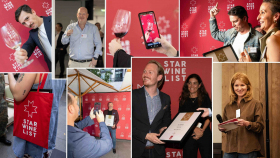
Take another look at all the action at this year’s International Final and keep up with how the new season is progressing.
Search like a Pro – explore 3,500+ wine lists